History & Briefings – Red Alert Saga
In his quest to save millions of lives, Albert Einstein will discover that altering the past does not make war disappear.
It merely changes its face.
From Stalin’s rise to power to Yuri’s psychic experiments, from the first Chronosphere to the emergence of the Empire of the Rising Sun, the story of Red Alert is one of a timeline constantly disrupted by those who seek to control it.
And it all begins with a handshake.
1946: an experiment for peace
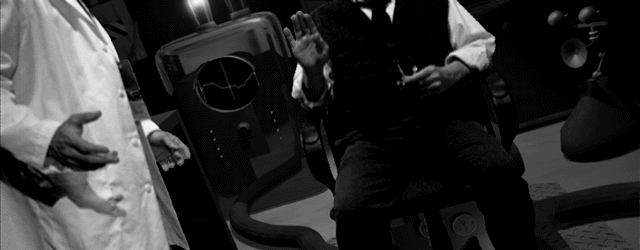
In 1946, at the Trinity test site in New Mexico, the physicist Albert Einstein tests an invention capable of turning human history on its head: a machine that allows time travel.
The Chronosphere.
Einstein seeks neither glory nor power. His aim is to prevent the catastrophe that has just ravaged the world.
To this end, he decides to erase Adolf Hitler from history before he can come to power.
His destination: Landsberg, Germany, in 1924.
At that time, Hitler is in prison following his subversive activities in Munich. Einstein travels back in time and waits for him to be released.
When Hitler appears, the scientist approaches him.
He shakes his hand.
This simple touch is enough to hurl Hitler out of the normal course of time.
Einstein then returns to 1946.
Hitler never came to power. The Nazi regime as we know it never existed. The Second World War therefore never took place in this form.
Einstein must have succeeded.
Yet his face immediately betrays his concern.
For by removing one Tyrant, he may well have paved the way for another.


The dream of all great conquerors
Hitler’s demise profoundly alters the political balance of power in Europe.
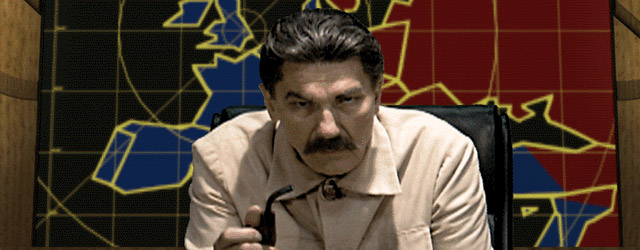
With Nazi Germany no longer to contend with the Soviet Union, Joseph Stalin wields considerable power and no longer faces a rival in the West capable of containing his ambitions.
Europe, for its part, was divided.
Its governments did not anticipate a war on this scale and were ill-prepared to face the immense Soviet military machine.
Stalin then saw a historic opportunity.
Since ancient times, the greatest conquerors had dreamt of dominating the entire European continent.
He intended to be the one to achieve it.
Europe enters the war
Soviet tanks cross the borders.
The war begins.
The Red Army advances with terrifying speed. From Moscow to Berlin, then towards southern Europe, territories fall one after another.
Athens is under threat. Rebellions are crushed. Opponents vanish, and Stalin ruthlessly eliminates all those he considers traitors - or who might one day become so.
Faced with this offensive, the surviving European nations organise themselves into the Allied Forces.
Command is entrusted to General Von Esling, whose headquarters are based in Algiers.
But the Allies quickly realise that Soviet military superiority cannot be countered with conventional weapons alone.
They need Einstein.
However, the physicist has fallen into enemy hands.
A crucial mission is therefore entrusted to one of the Allies’ most formidable agents: Tanya.### The Eagle’s Victory
Tanya manages to free Albert Einstein.
Back with the Allies, the scientist immediately resumes his research into time technology.
His work culminates in a spectacular experiment:the Philadelphia Experiment.
Einstein succeeds in chronoporting an entire cruiser from one point on the globe to another before bringing it back a few seconds later.
Teleportation becomes a weapon.
However, during a second test carried out with a VCM on the island of Elba, Soviet spies manage to film the experiment.
Stalin immediately recognised the potential of this technology.
The Soviet Union was already working on the Iron Curtain, a device capable of making vehicles and buildings temporarily invulnerable.
If the Soviets managed to combine this technology with that of the Chronosphere, their superiority could become overwhelming.
A veritable technological race began.
But the Allies eventually gained the upper hand.
Thanks to Einstein’s inventions and a series of successful offensives, they drove the Soviet forces back to the heart of their territory.
The war ends in Moscow.
Stalin dies in the ruins of the Kremlin.
Europe is liberated.
But a new humiliation has just been born in Russia.
And several decades later, it will spark a new war.
A fast-food restaurant on Red Square?
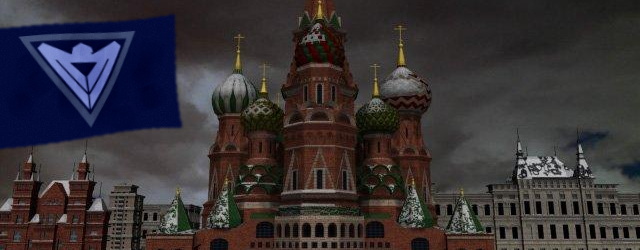
Following their victory, the Allied Forces occupied Moscow and set about gradually transforming the Soviet Union.
The Western presence became visible even in everyday life.
Allied soldiers patrol the streets. New shops spring up. Symbols of Western culture take root even in the Soviet capital.
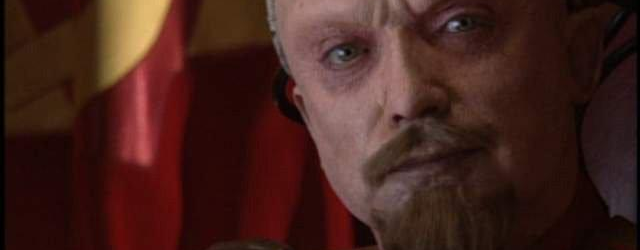
Among those witnessing this transformation is a young man in his twenties: Alexis Romanov.
He watches foreign soldiers marching through the streets of Moscow and sees the first fast-food outlets appear.
For him, this is not a liberation.
It is a humiliation.
Romanov then silently makes a vow: one day, Russia will take its revenge.
In the early 1970s, the Allies wished to gradually bring an end to their direct military administration of the Soviet Union.
They were looking for a moderate Russian leader, popular enough to govern the country but docile enough never to pose a threat.
Alexis Romanov seemed to be the ideal candidate.
The Allies thought they could control him.
They were wrong.
Shortly after he came to power, several CIA agents operating in the USSR began to disappear mysteriously.
And, most significantly, a strange figure appeared at Romanov’s side.
A bald man with extraordinary abilities.
His name is Yuri.
The New World Campaign
For years, Romanov has been plotting his revenge.
Under the guise of his organisation, the World Socialist Alliance, he is secretly rebuilding Soviet military power.
But his objective goes far beyond the reconquest of Europe.
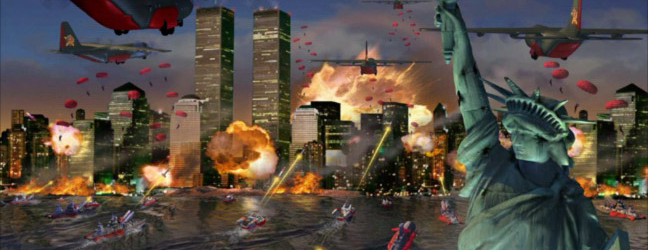
This time, the Soviet Union intends to strike directly at the heart of its enemy: the United States. Yuri plays a vital role in the plan.
Thanks to his research into mind control, he develops technologies capable of directly influencing the human mind.
When the offensive begins, the element of surprise is almost total.
Soviet forces cross the Atlantic and the Pacific, whilst units stationed in Mexico cross the border and invade Texas.
Romanov, however, does not simply want to reduce America to ashes.
He wishes to capture its infrastructure, control its cities and seize its strategic locations.
His ambition is clear: to make the United States the first great socialist nation in the West.


Chrono Storm
The Soviet invasion plunges the United States into chaos.
President Dugan himself falls under Yuri’s psychic influence before finally being freed.
Having taken refuge in Canada, he then attempts to rebuild the Allied resistance.
But the United States cannot win on its own.
Dugan therefore negotiates with the European Defence Council.
The Europeans, however, fear the Soviet nuclear arsenal. An agreement is reached: the Americans, in particular, place Tanya’s expertise at the Europeans’ disposal to eliminate this threat, whilst Europe provides supplies, equipment and military support to the United States.
Tanya destroys the nuclear silos that threatened the continent.
The Western alliance is reborn.
Then Albert Einstein, in turn, joins the Americans.
Once again, his inventions change the course of the war.
The Allies now have the Chronosphere at their disposal, as well as technology capable of controlling weather phenomena and unleashing terrible storms.
The counter-offensive becomes unstoppable.
The Soviets are finally defeated.
Romanov is captured and transferred to Britain, where he is imprisoned in the Tower of London.
The war seems to be over.
But the man who stood in his shade has vanished.
Villains are hard to kill
The United States is gradually returning to peace.
Romanov is imprisoned. The Soviet army has been defeated. The Allies believe they have averted the worst.
Then Yuri reappears.
And his plan surpasses anything Romanov could ever have imagined.
Even before the Soviet defeat, Yuri had secretly built a network of psychic Dominators spread across the globe.
These colossal devices are capable of mentally enslaving entire populations.
Yuri does not wish to conquer territories.
He wants to control humanity itself.
The Dominators are about to be activated simultaneously.
Faced with a threat of such magnitude, President Dugan no longer knows where to turn.
All he can do is hope for a miracle.
And that miracle will once again take the form of time travel.
Back to the Past
In San Francisco, Yuri’s psychic Dominator malfunctions.
The Allies suddenly find themselves with a brief window of opportunity.
They therefore decide to use a new version of Einstein’s time machine.
The plan is extremely risky.
Rather than confronting Yuri after he has built his psychic empire, the Allies will travel back in time to a period when the war against Romanov is not yet over.
This will allow them to stop Yuri from carrying out his plan before he becomes invincible.
The machine is activated.
The Allied Forces vanish from the present.
And reappear in the midst of the Soviet occupation.
The War of the Dominators
The Allies must now fight two wars almost simultaneously.
The first is to bring the conflict against Romanov to an end.
The second, far stranger, is to prevent Yuri from taking control of the world.
He possesses an arsenal as spectacular as it is terrifying.
His psychic Dominators allow him to control populations.
His cloning technologies provide him with fresh troops.
His genetic mutator can transform human beings.
And Yuri fully understands the importance of information: he also uses the media as a weapon.
Even Allied leaders become targets.
Yuri attempts to eliminate them, control them and sometimes even replace them.
The war is therefore no longer solely about territory.
It is about the human mind.
Peace at last?
After a long campaign, the Allies finally discover the Emplacement of Yuri’s headquarters.
It is in Antarctica.
A decisive offensive is launched against his stronghold.
Yuri’s forces are defeated and their leader is captured alive.
This time, the Allies take precautions.
Yuri is confined to a psychic prison specially designed to neutralise his powers.
With his defeat, the timeline stabilises.
The changes caused by time travel even produce unexpected consequences.
General Carville, who died in the first version of events, is now alive.
Humanity seems at last to have found peace.
But in the Red Alert universe, time is a weapon.
And sooner or later, someone always ends up wanting to use it.
A new attempt to rewrite history
The war resumes.
Once again, the Allied Forces advance as far as the Kremlin.
But behind the scenes, several Soviet leaders are preparing a radical solution.
Anatoli Cherdenko and General Bronislav have been working for months with the scientist Gregor Zelinsky on their own time machine.
Their reasoning is simple.
For decades, the Allies have been winning their wars thanks to Albert Einstein’s inventions.
The Chronosphere.
Advanced technologies.
The weapons that have enabled the West to maintain its advantage.
So why continue to fight against his inventions?
All they need to do is prevent Einstein from creating them.
Cherdenko therefore travels back in time to eliminate the scientist.
The mission is a success.
Albert Einstein vanishes from history.
Convinced he has secured the Soviet Union’s definitive victory, Cherdenko returns to his own time.
But when he returns, the world is nothing like he had imagined.
The Allied Forces still exist.
The war continues.
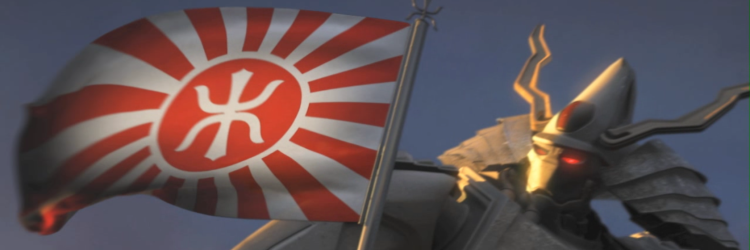
And, most importantly, a third superpower now dominates part of the planet.The Empire of the Rising Sun. By eliminating Einstein, Cherdenko did not secure a Soviet victory.
He created a new war.


The enemy of my enemy
The Soviet Union nevertheless attempts to capitalise on the situation by launching a major offensive against Europe.
The Allies manage to repel it.
But both sides emerge weakened from the clash.
This is exactly what the Empire of the Rising Sun had been waiting for.
Imperial forces launch a massive offensive against the Pacific coast of the United States.
Faced with this new adversary, the Allies and the Soviets realise that they both risk annihilation if they continue to fight each other.
An unlikely coalition is formed.
Yesterday’s enemies now fight side by side against the Empire.
However, this alliance is far from universally supported.
The American President Ackerman, a staunch anti-communist, rejects the very idea of lasting cooperation with Moscow.
He decides to secretly deploy a super-weapon to destroy the Soviet capital.
The Allies uncover his plan and intervene before he can unleash another catastrophe.
The super-weapon is destroyed.
Ackerman dies during the operation.
The alliance with the Soviets can continue.
The Fall of the Empire
Freed from the internal threat posed by Ackerman, the Allies and the Soviets concentrate their forces against the Empire of the Rising Sun.
A massive offensive is launched against Japan.
The fighting finally reaches Tokyo.
The Emperor falls and imperial military power is shattered.
The war once again seems to be drawing to a close.
But the alliance between Moscow and the Western powers was never based on trust.
Only on necessity.
And that necessity has now vanished.
A stab in the back
Dr Zelinsky makes contact with the Allies.
He reveals the truth to them.
Cherdenko has altered the past.
Einstein’s disappearance and the emergence of this new reality are the direct consequences of his journey through time.
But that is not all.
Whilst the Allies were concentrating their forces against Japan, Cherdenko was secretly preparing a new invasion force in Cuba.
The coalition was merely a means of buying time.
Thanks to information from Zelinsky, the Allies seized the initiative.
The Soviet forces stationed in Cuba were destroyed before they could launch their offensive.
Cherdenko found himself cornered in St Petersburg.
In a last-ditch attempt to escape his enemies, he devises an escape plan that is ambitious to say the least: to flee to the Moon. The Allies intercept him before he can escape.
Cherdenko is captured and imprisoned in a cryogenic prison.
Once again, the Allies win the war.
But the peace that follows the victory remains fragile.
The Soviet Uprising
The Allies now largely dominate the international stage.
Yet in Russia, not everyone accepts defeat.
Soviet patriots organise a resistance against the Allied occupation.
Their attention quickly turns to an organisation that has become extremely powerful thanks to the political chaos:FutureTech.
The company is exploiting Russia’s instability to carry out particularly worrying experiments.
The resistance fighters eventually discover that FutureTech is working with Rupert Thornley, President of the European Union.
Their project is called the Sigma Harmoniser.
This machine possesses extraordinary power: it is said to be capable of selectively freezing time.
Its ultimate objective is even more radical.
Thornley wants to use the Harmoniser to erase the Soviet Union from the course of history once and for all.
The Russian resistance fighters then launch a series of operations against FutureTech.
The conflict leads them to a major base located in the Yucatán.
After fierce fighting, the Sigma Harmoniser is destroyed.
The scandal leads to Thornley’s resignation and ultimately results in the withdrawal of Allied Forces from the USSR.
Russia thus escapes its temporal annihilation.
But the consequences of the war also continue to be felt in Japan.
Japan after defeat
The Empire of the Rising Sun has lost the war and Japan now finds itself under Allied rule.
The new emperor, Tatsu, must govern a deeply divided country.
In the north, Soviet forces are attempting to seize several Japanese islands.
Japanese troops respond and, after several victories, manage to defeat the two Soviet generals responsible for the offensive.
But the heart of Japan is also in turmoil.
Several Daimyos refuse to accept the Allied occupation and continue the fight.
Initially, the Allies fight alongside Tatsu to eliminate these warlords.
However, successive clashes exhaust their forces.
Tatsu then decides to capitalise on their weakness.
During the battle against the last daimyo, the Emperor turns against his former allies and attempts to crush them.
Even though caught off guard, the Allies put up a fight.
Tatsu is finally defeated.
But amongst the ruins of the former Empire, there remains a weapon whose power no one truly understands.
A young woman.Yuriko Omega.### Yuriko Omega Yuriko is a young Japanese woman endowed with extraordinary psionic abilities.
Her powers far exceed those of an ordinary human being.
Dr Shinji Shimada, working for the Empire of the Rising Sun, conducts numerous experiments on her in order to understand the origin of her abilities and turn them into a weapon.
The result exceeds all expectations.
During the war against the Allies, Yuriko becomes one of the Empire’s most formidable living weapons.
Following Japan’s defeat, the Allies realise the danger she poses.
They capture her and imprison her in a maximum-security complex.
But no prison seems truly capable of containing Yuriko.
She manages to escape.
Now free, she has but one goal: to return to Japan, take revenge on those who turned her into a weapon, and find her sister, Izumi.
The Two Sisters
Yuriko tracks down Dr Shimada.
Her revenge is brutal.
She kills the scientist and destroys his complex.
Then she finally finds Izumi.
But the reunion does not go as she had hoped.
Izumi is herself consumed by a thirst for power.
The two sisters clash.
Yuriko eventually gains the upper hand and defeats Izumi before escaping from the collapsing complex.
She is now free.
No more laboratory.
No more Empire.
No more scientists to give her orders.
No one left to decide what she should become.
And perhaps that is precisely what makes her so dangerous.
A story that keeps being rewritten
The story of Red Alert is ultimately one of paradox.
It all begins when Albert Einstein travels back in time in the hope of preventing a world war.
He succeeds.
But his intervention enables Stalin to launch his own conquest of Europe.
Decades later, Einstein’s inventions enable the Allies to defeat the Soviet Union.
Then a new war breaks out.
Yuri attempts to take control of humanity.
The Allies once again alter the past to stop him.
Finally, Cherdenko repeats Einstein’s original mistake: convinced that simply erasing one man is enough to change history, he removes Einstein himself from the timeline.
The result is still not peace.
This marks the emergence of the Empire of the Rising Sun and the start of a new world war.
In this universe, every attempt to correct the past therefore creates new, unpredictable consequences.
Dictators come and go.
Alliances are overturned.
Technologies become ever more extravagant.
But war, for its part, remains.
And somewhere amidst this succession of alternative realities, one question lingers – a question Einstein might perhaps have asked himself before activating his first machine:
Can we really change history without paying the price?