The Flame Tank
- Designation: AT-6 (Assault Tank)
- Affiliation: Nod
- Role: Short-range base assault
- Launch date: 2066
- Class: Attack
- Armament: Twin “Devil’s Breath” flamethrower cannons
- Type: Medium vehicle
- Speed: Average
Background
“The site had been shut down for the night, but we heard a rumbling sound. We thought it was Jenkins carrying out some late-night maintenance, but then everything… everything… We were surrounded by fire, swirling around us, destroying the equipment, burning people alive, engulfing the entire camp, and in the midst of it all was this black monster, this demon spewing that inferno everywhere… I was sure I was in hell.” - Henry Liu, Worker at the TCN construction site, sole survivor
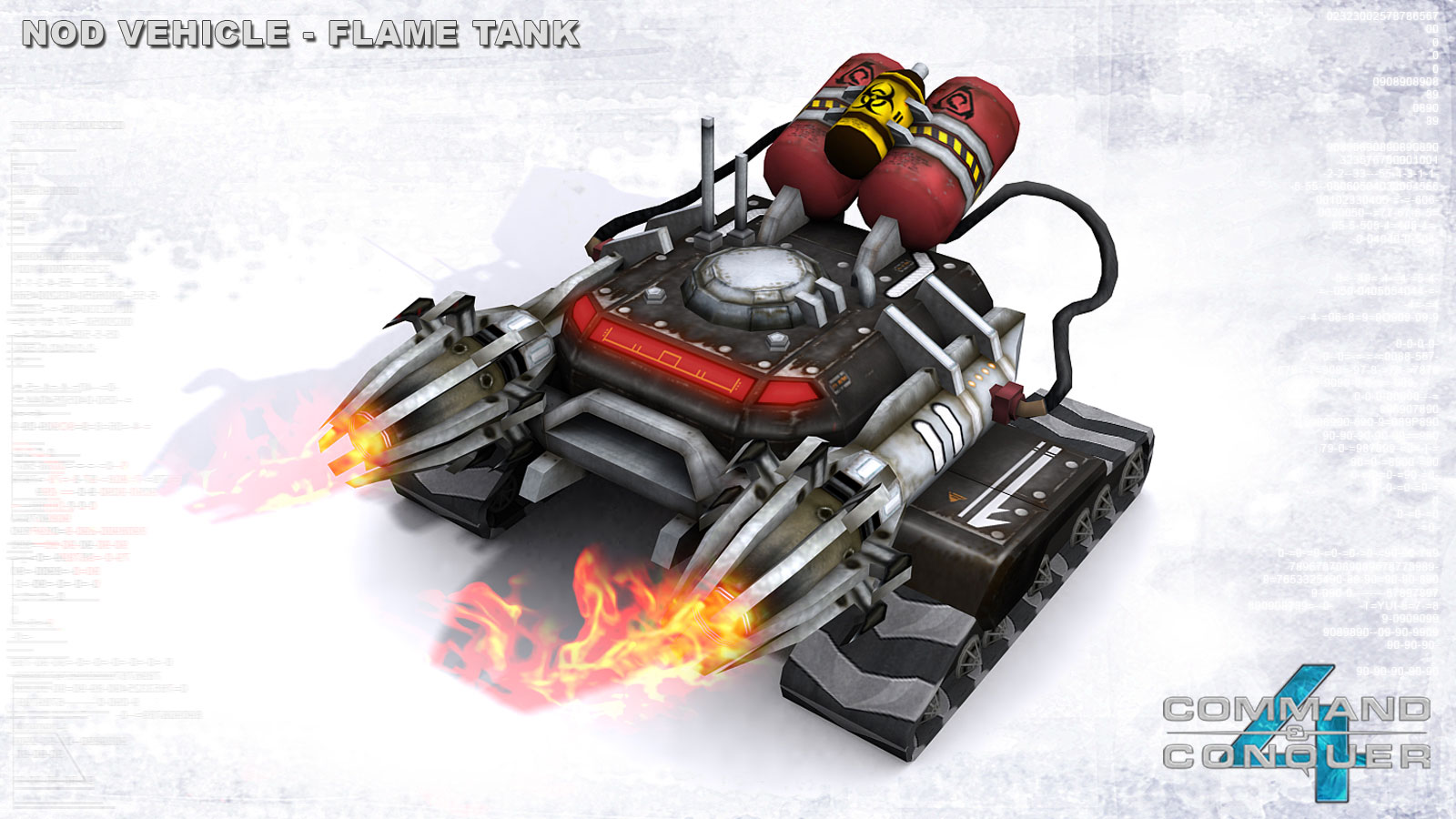
The GDI had always harboured reservations about the questionable and ‘inhuman’ use of flamethrowers on the battlefield, but the Brotherhood of Nod has no such qualms. The “Tongue of the Demon” Flame Tank is a legitimate cause for concern due to its ability to wipe out entire infantry divisions and raze entire structures to the ground in a matter of seconds. The GDI’s inability to provide effective protection against flames for its infantry has made this vehicle a key weapon in Nod’s arsenal for nearly a century and, despite a few minor improvements, the Flamethrower Tank has remained largely unchanged.
In 2064, this changed somewhat with the introduction of the GDI’s new Zonal Armour series, which was effective against flames and whose low production cost allowed the GDI to issue it to every one of its Soldiers. This posed a problem for the Separatist forces, who relied on this Flame Tank to sow panic at the Tiberium Control Network Construction Yards. With an older model that was becoming increasingly ineffective against Zonal Infantry and easily destroyed by GDI tanks, the Separatists began to modify the Flame Tank; they reformulated the chemical mixture used in the Flamethrower to make it more effective against structures and upgraded its armour.
These Separatist Flame Tanks wreaked havoc in the yellow zones, razing TCN construction sites until their rampage was finally halted by the GDI. Kane’s commanders, who had predicted that the Flame Tank’s days were numbered and had recommended its decommissioning, were embarrassed by the Separatists’ successful revival of the vehicle and ordered the design of a new Flame Tank based on the Separatist model.
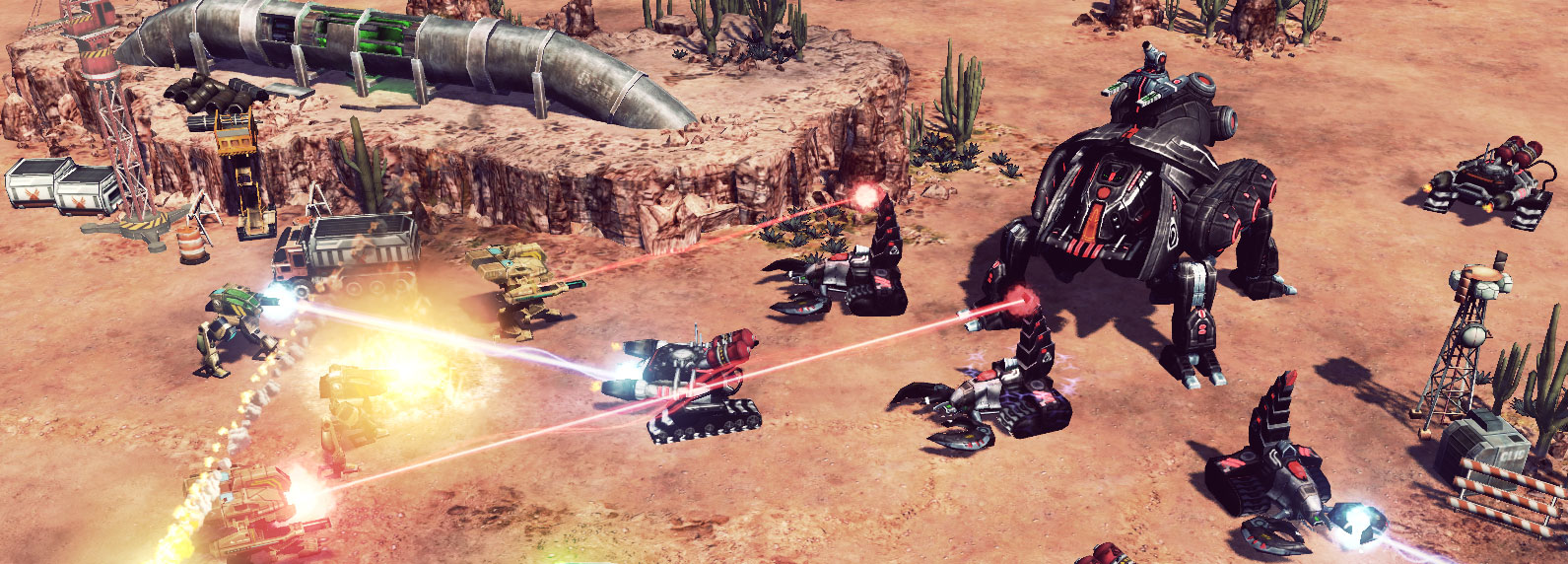
Introduced in 2066, Nod’s new Flame Tank closely follows in the footsteps of its more powerful Separatist Brother, firing more slowly and boasting heavier armour than the three previous models. Although its official role is to ‘defend’ the TCN, Nod’s Flame Tanks were designed with a single purpose in mind – to locate enemy bases and raze them to the ground.
Battlefield Specifications
In the Flames With modifications to the fuel cocktail, Flame Tanks are now far more effective at destroying structures than ever before, thus becoming the bane of many Defence-class Commanders. Although technological advances have made flamethrowers less effective against other targets, Flame Tanks are still capable of inflicting significant damage over a wide area and remain a problem for concentrations of units, particularly infantry.Burn! BURN!!! Each attack not only burns the targets under fire, but also all nearby units until the flames die down. Furthermore, flamethrowers are powerful enough to retreat from the fire and engage any units that come to the rescue. Nod Attack-class commanders can continue to fire into a lightly burnt area, eventually turning the flames into a firestorm capable of incinerating any infantry or vehicles.Trail of Fire The decision to sacrifice some of the Flame Tanks’ speed in favour of additional armour was met with opposition from many tank commanders. The ability to withstand more attacks was welcome, but they argued that the need to reach a target quickly was more important given the vehicle’s armament. Without altering the design, the engineers modified the new vehicles by adding a useful, yet extremely dangerous, connection between the fuel tanks and the engines; the tank’s Conductor could use the fuel to boost its speed instead of firing, creating a trail of fire behind the vehicle. To prevent an internal explosion, the speed boost can only be used for a few seconds before the vehicle automatically reverts to standard mode.You and Me
Much to the amusement of many Flame Tank commanders, most civilians believe that a Flame Tank is an extremely dangerous rolling bomb, ready to explode should a stray bullet hit the fuel tank. This is a common myth, but the fuel tanks are designed to be non-flammable. However, if a Flame Tank were to explode, it could destroy neighbouring Flame Tanks.