The Sandstorm
- Designation: AHV-8 (Assault Hovercraft)
- Affiliation: GDI
- Role: Anti-aircraft
- Launch date: 2066
- Class: Attack
- Armament: Multiple Scorpion Rocket Launchers, ‘Missile Storm’ Launch System (Upgrade)
- Type: Medium Hovercraft
- Speed: Average
Background
A collective complaint amongst veterans of the Second Tiberium War who served during the Third War highlighted the lack of a fast patrol vehicle – such as the GDI’s Hover MLRS Mk. II Hovercraft. Whilst sub-factions such as the Steel Talons were capable of annihilating any Nod battalion foolish enough to stand up to them, the Brotherhood’s new policy of disparate, highly mobile ‘hit-and-run’ attacks enabled it to gradually evade GDI forces. It was the creation of the Tiberium Control Network that changed the GDI Strategic Command’s perspective on the movement of the battlefield, leading to the reinstatement of the LRM programme and the subsequent creation of the GDI’s Sandstorm LRM.
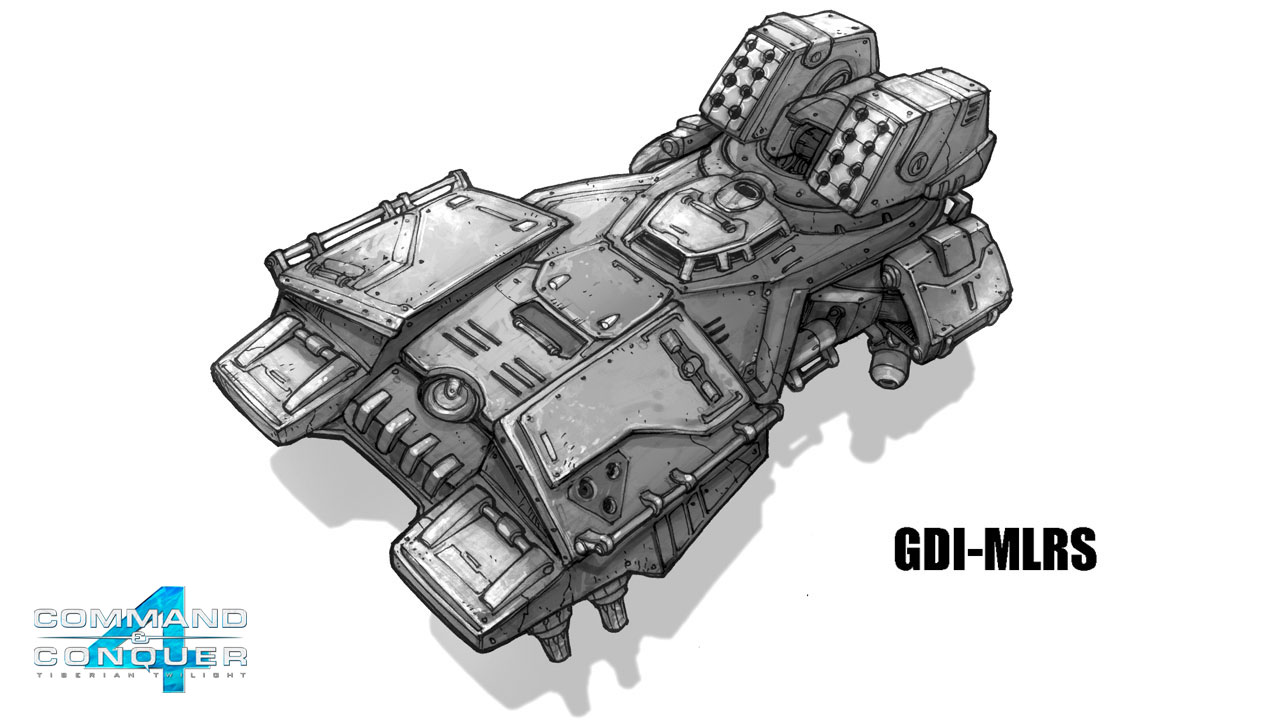
Now fully deployed across all GDI fronts, the Sandstorm has earned a reputation as the most versatile armed platform on the modern battlefield. Armed with the most advanced multiple missile launcher system, originally developed during the Second Tiberium War, the Sandstorm is designed to seek out and eliminate Nod’s air force, frequently escorting other GDI units into the combat zone. The vehicle is equipped with state-of-the-art anti-gravity glider technology, giving the Sandstorm greater mobility than most GDI assault vehicles – a particularly vital advantage when hunting down Nod’s air forces.
“If it’s on solid ground, the Steel Talons can crush it like a fizzy drink can. It’s when you’re firing at a hive full of Nod gnats that you start hoping you’ve got a few Sandstorms to hand.” – Major Albert W. Eckhart, 151st Steel Talons Special Armoured Brigade
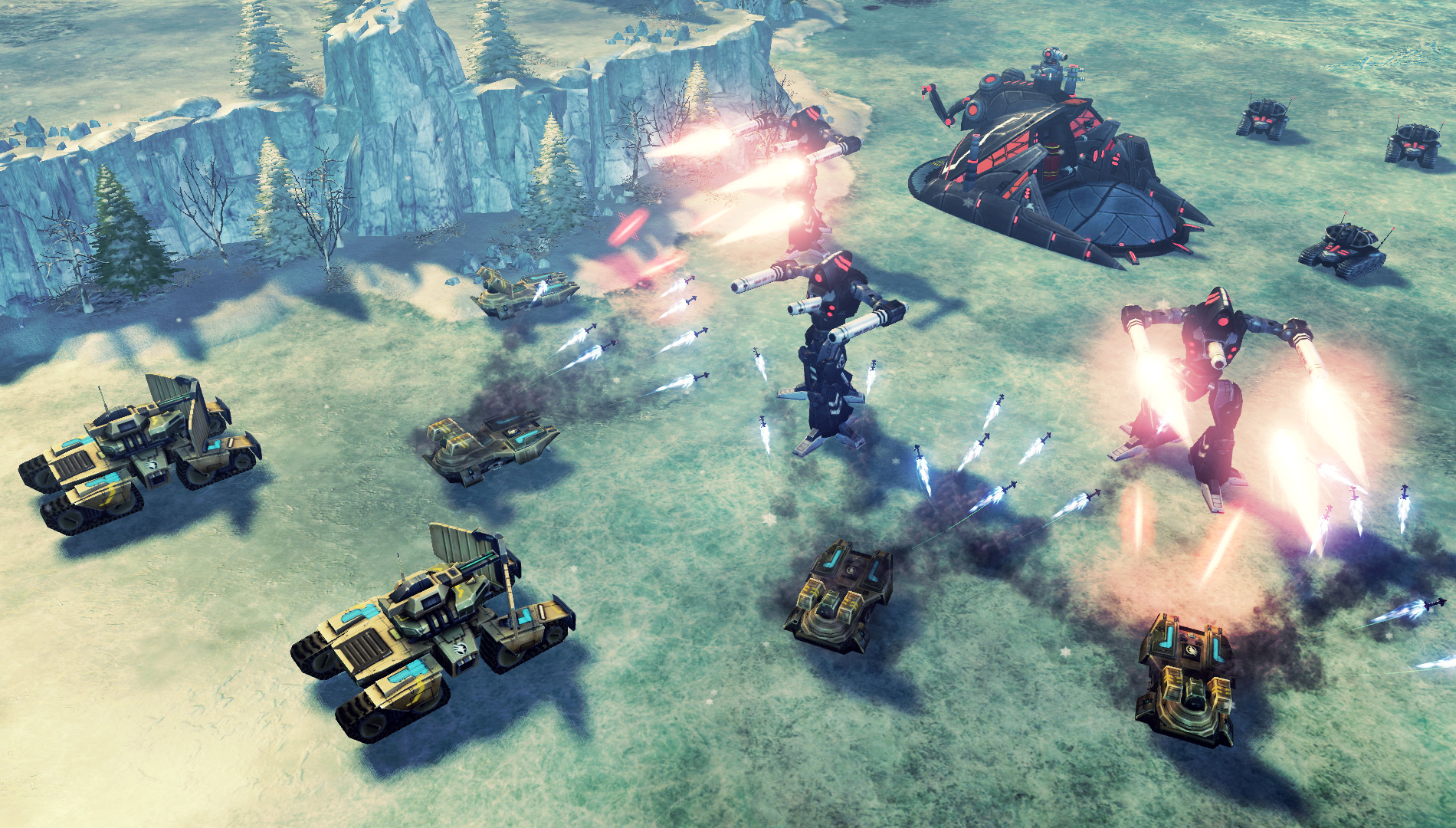
Originally designed for light anti-air escort duties, the Sandstorm’s design stemmed from a desire for high mobility and light armour, bearing in mind that the much heavier Titans and Hunters would fulfil the role of conventional armoured vehicles at the front. Over time, a growing number of GDI battlefield commanders began to deploy patrols consisting entirely of Sandstorms to pursue Nod forces in remote regions and across rugged terrain. Even without support, these early Sandstorms proved highly effective at destroying both aircraft and isolated Shadow Teams; however, it was not uncommon for the Hovercraft to sustain heavy damage in every engagement. The decision to sacrifice some of its speed in favour of improved armour was taken by the High Command of the Steel Talons. Today, the AHv-8 variant, primarily used by GDI Attack-class commanders, boasts a balanced combination of armour, firepower and unrivalled mobility.
Battlefield Specifications
A Versatile Enemy Equipped with powerful hovercraft technology, reinforced with ablative armour plating and computer-controlled twin Scorpion Rocket Turrets, the Sandstorm can fulfil a wide variety of roles in any battle scenario, ranging from anti-air support to frontal engagement. The weapon system can be upgraded immediately using equipment crates located on the battlefield, allowing Sandstorm crews to effectively double their missile payload.Shoot and Scoot The ability to fire a salvo of deadly missiles and escape before the target can retaliate requires more than just speed. Just like its lighter cousin, the Talon, the Sandstorm can use its High Technology hovercraft engines to climb up and down vertical cliff faces, making pursuit impossible for most of Nod’s ground vehicles.The Calm Before the Storm
Switching from standard missiles to ‘Missile Storms’ is one of the favourite tactics of many Commanders against the Cobras’ aerial swarms. The missile launchers load smaller ‘Storm’ missiles and fire them at a much faster rate, sacrificing accuracy in the process. Although the lack of accuracy renders this system ineffective against a single target, the destructive power unleashed by multiple shockwaves and explosions, all concentrated within a small area, has proven devastating against tightly packed groups of enemies, particularly aircraft.