GST
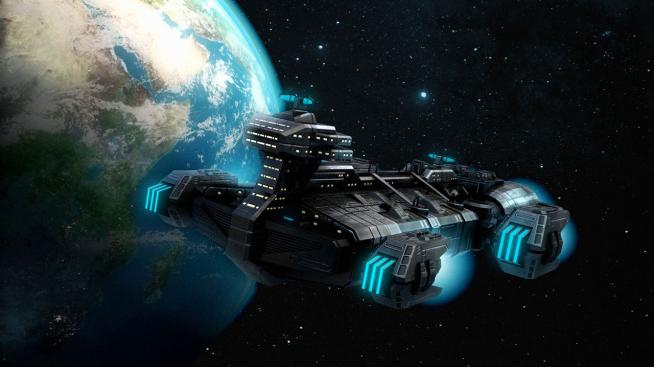
As a cornerstone of the GDI-Nod alliance, alongside the Crawler and the Tiberium control network, one might expect the Global Stratospheric Transport to have been designed by the GDI or Kane. Such an assumption could not be further from the truth; the GST began life as a waste transport.
As might be expected with the largest public works project ever undertaken, the early days of construction of the Tiberium Control Network were a logistical nightmare. One of the most important questions facing Idris – an independent, non-partisan body set up to build the network and act as a mediator between the GDI and Nod Command – was, on the face of it, a simple one: what to do with all the construction waste?
Needless to say, it was not as simple as storing rubble and then taking it to the tip or turning it into building materials; indeed, much of the planet’s surface had been significantly contaminated by Tiberium following the Temple Prime incident in 2047, rendering much of the rubble extremely toxic and a perfect breeding ground for new Tiberium Crystals. Following a series of industrial accidents, which resulted in numerous deaths, particularly in North Africa-where one incident wiped out an entire camp of Idris workers-the GDI Council was forced to take action.
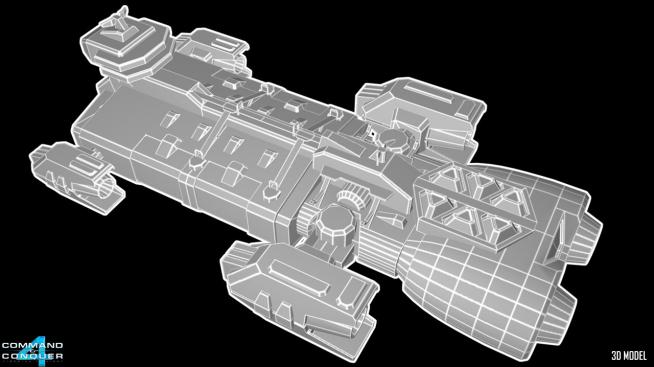
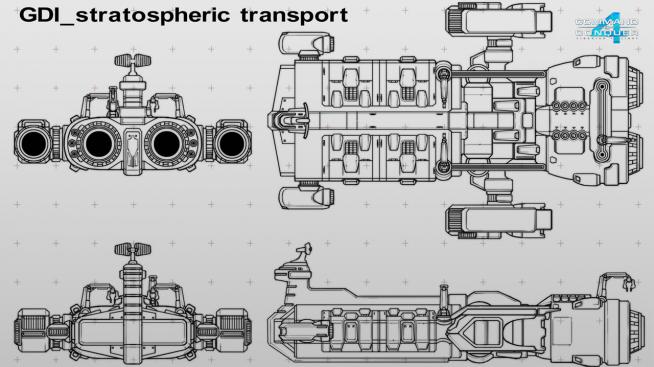
The proposed solution was a stratospheric waste storage and disposal system, consisting essentially of a fleet of gigantic barges designed to contain Tiberium-contaminated waste for a month. These barge-like vessels travel through the stratosphere, land to collect waste and, once full, return to the upper atmosphere, where a powerful launch system is used to eject the waste far into space. Approval was granted swiftly and, thanks to a heroic effort by the GDI Engineers, the waste disposal fleet was in place and fully operational by 2064.
The evolution of the waste collection fleet into its current form was driven by the rise of Noddie fundamentalism and the separatist movement in the late 2060s. These groups viewed the Tiberium Control Network as ‘heresy’ and sought to disrupt construction efforts and prevent the completion of the TCN. It quickly became apparent that the previous method – protection via static GDI and Nod bases – was not flexible enough to cope with an enemy capable of launching rapid attacks on multiple fronts without warning. This led to the development of the Crawler, the mobile base system, and the upgrading of Stratospheric Transporters into forward Command Hubs, capable of carrying entire regiments of troops and – using a modified waste disposal system – rapidly deploying Crawlers onto the battlefield, anywhere in the world at short notice.
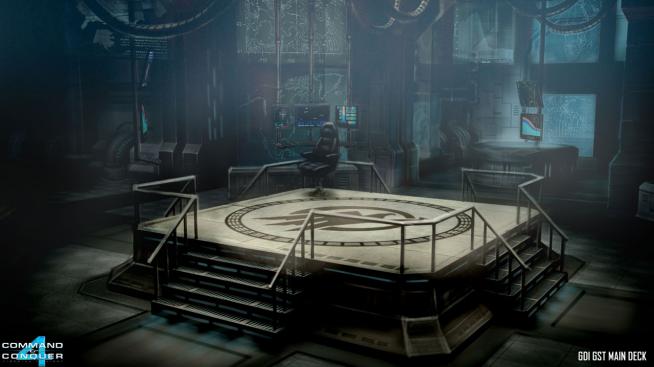
The first Global Stratospheric Transport – the GST Methuselah, which was to become the first casualty of the Incursion War – reached the upper atmosphere in 2071, and since then the fleet has expanded to include more than a dozen vessels. Consequently, by 2073 much of the separatist resistance had gone underground, which significantly reduced the human cost of building the TCN. Today, the fleet is constantly circling the globe, ready to respond to any threat, at any time, and anywhere.