Community Summit 12
 On Thursday 8 November 2012, I woke up, got ready for work and checked my emails on my mobile before setting off. Amongst the few emails, I spotted a CnCSaga server alert dated 3 am… so I went to the website and saw that the server had indeed ‘crashed’; so I decided to restart the server and, once that was done, I decided to check my CnCSaga emails as well, and that’s when I discovered an email dated 1 am from Eric Krause – our Community Manager at Victory Games – entitled “EALA is calling you – C&C Summit Dec 2012”.
Still reeling from the shock that this email had almost failed to reach its destination, another “fear” gripped me: the dates! Indeed, I’d already planned a week’s holiday in Ireland for December. A second stroke of luck: the departure was scheduled for the day after my return, so I’d be able to go straight from one trip to the next without having to go home via Paris.
The invitation mentions two people invited to CnCSaga; after checking that it’s indeed up to me to choose, I naturally ask Zéphyr to come with me. He renews his passport and we complete the US administrative formalities so we can travel to the United States. In fact, the form with those odd questions now has to be completed online before departure (ESTA).
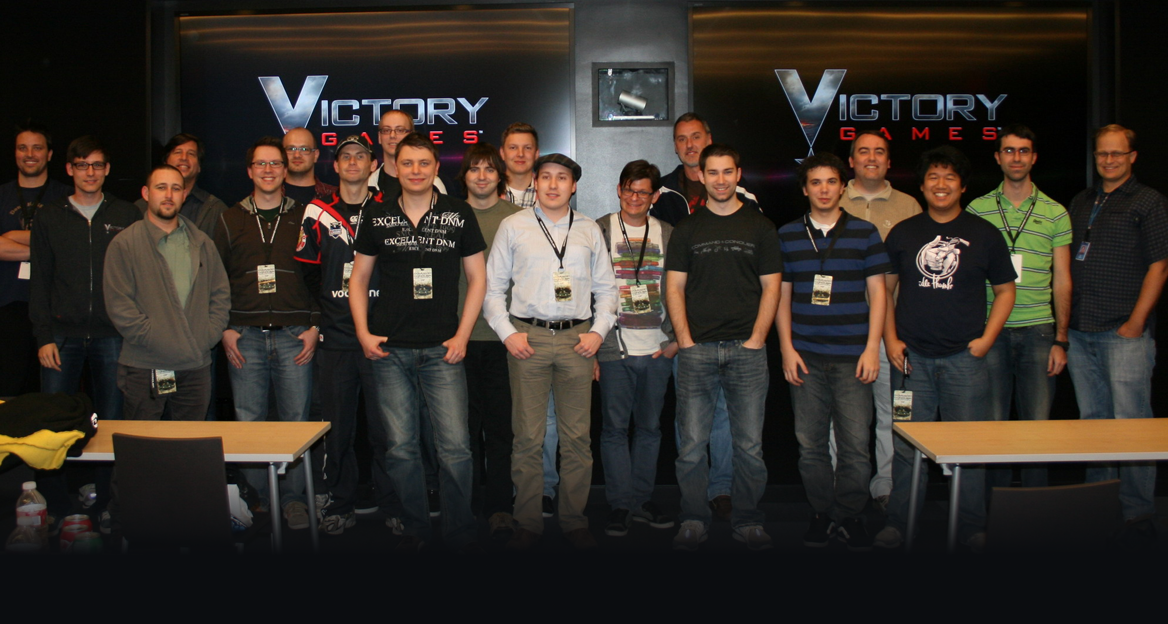
The 13 summit participants are: Methuselah, Cypher, Sonic, ZeeHypnotist, Stephanovic, Tchutch, Zéphyr, Seraph, Dusterr, Freezy, Osbes, AMGLauncher.
This is a small summit in terms of the number of guests (usually at least 20), which makes it all the more significant that we were allocated two places.
On Sunday 9 December, we headed to our respective airports: Geneva for Zéphyr, for a Geneva–London–Los Angeles flight, and Paris for me, for a Paris–Dallas–Los Angeles flight.
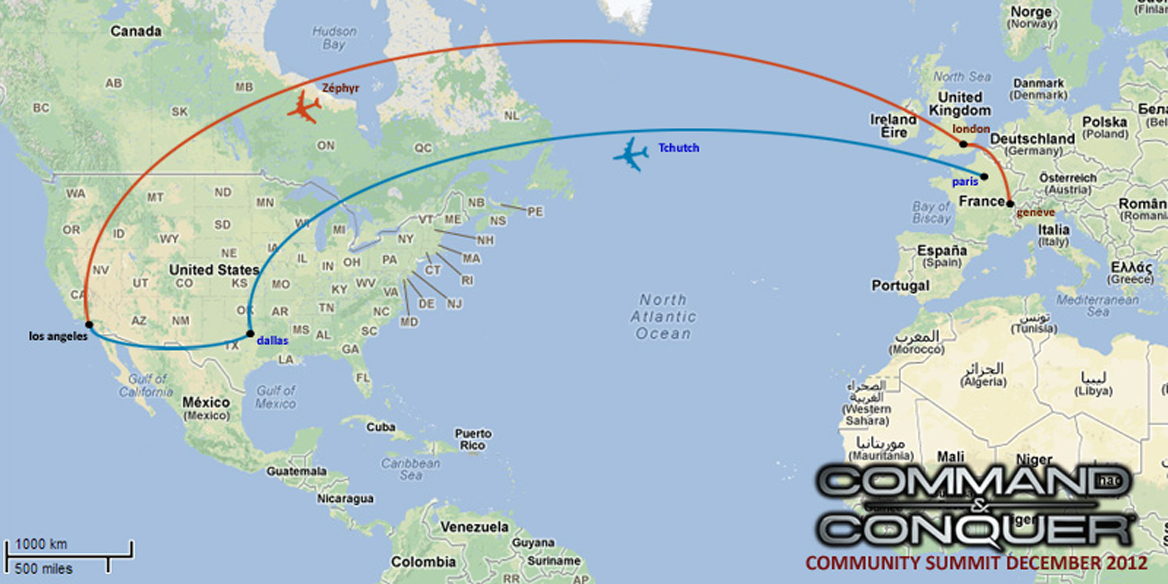
The community summits are a wonderful gift from EA, both for us and for the website, though the journey itself is always very gruelling. For me, it was still a journey of 19 hours each way(normally the return journey should only have taken 16 hours) with a mad dash in Dallas because the connection was so short (one wonders whether the tour operator organising flights for Electronic Arts realises that, without an express pass, it’s impossible to clear US customs within an hour).
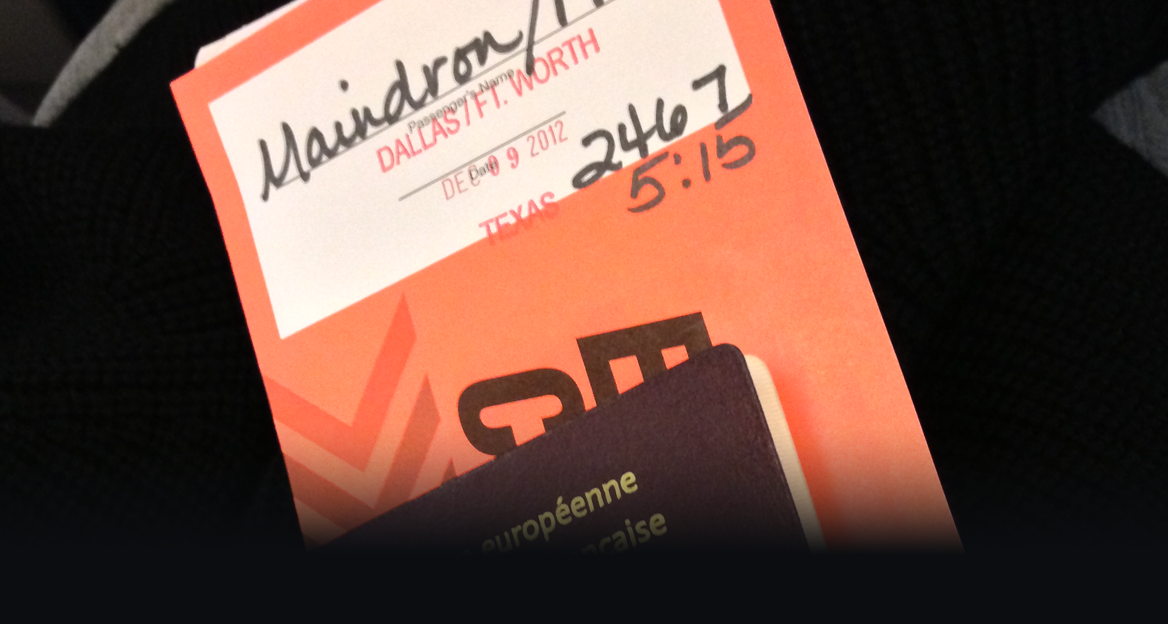
But let’s forget that detail, because let’s be honest: even though it’s very stressful and exhausting,the rest of the stay quickly makes you forget the journey.# Arrival in Los Angeles
I arrive at 7.30 pm at the Courtyard by Marriott, a lovely hotel (almost as good as the Ritz Carlton Marina Del Rey from my previous three trips), where Jim is waiting for me. I settle into our room, then pop down to the spa: What a pleasure to step outside (18°C) and slip into a 37°C hot tub to relax.
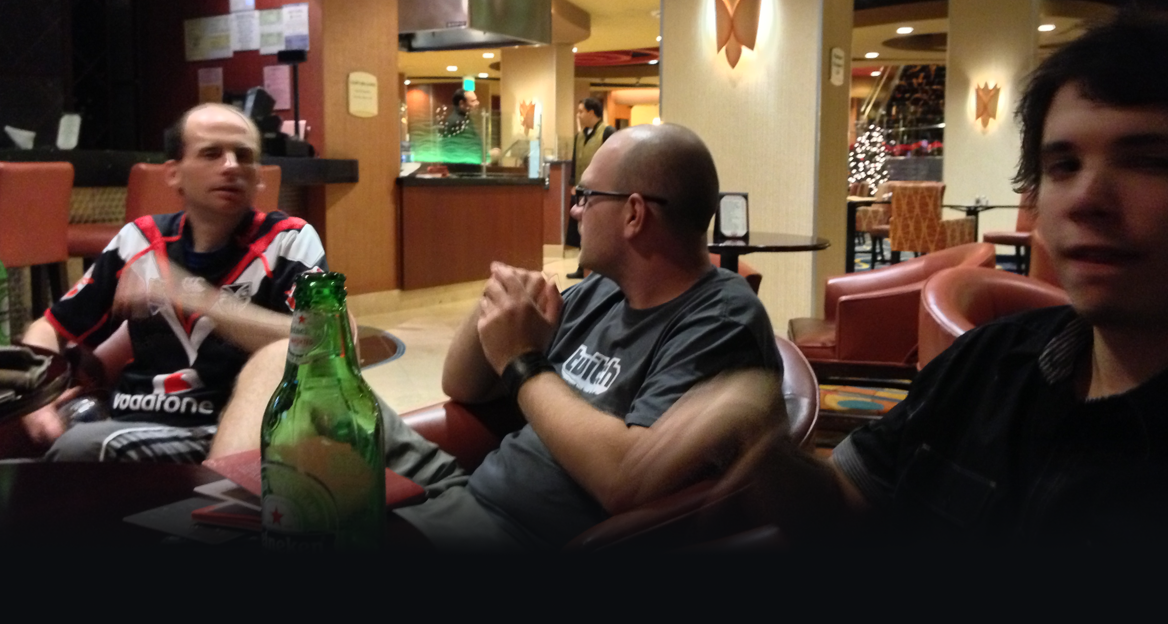
We then met up with Sonic and ZeeHypnotist from CnCNZ, David (the Community Manager for Tiberium Alliances), Freezy and Osbes from United Forum at the hotel bar.
Day One
After waking up at 4 am (I’m finding it very hard to adjust to the time difference), and after Jim had accidentally sent a spa invitation to a Swiss recruiter, we met up with the others outside the hotel at 9 am and headed to EALA for breakfast with the traditional “burritos”.
The Community Summit can begin!
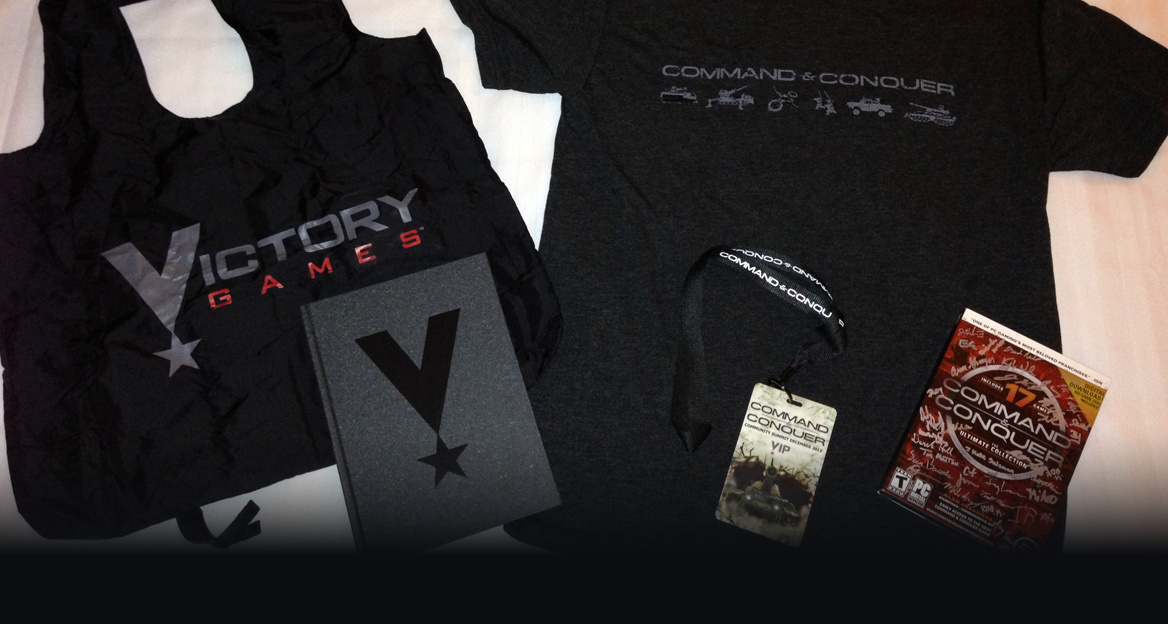
Monday, 10 am: Jon Van Caneghem kicked off the day with an introduction to the “vision”, including a brief look back at the boxed game project, followed by the market focus on digital and, finally, free-to-play. He emphasises that the experience must remain the same: a classic Command & Conquer game with three factions, building, resource gathering and combat.
They have been working on the game for longer than any other CnC title (since the release of CnC4, whereas they usually have to develop a game in a year at most), and it is the first to benefit from a budget for post-launch support with a full team.
Their target rating is +16 (they want to avoid +18); this may have an impact on what is permissible in terms of ‘violence’.
Finally, he reminds us that we’ll be testing an alpha version of the game and that many things will change and be improved.
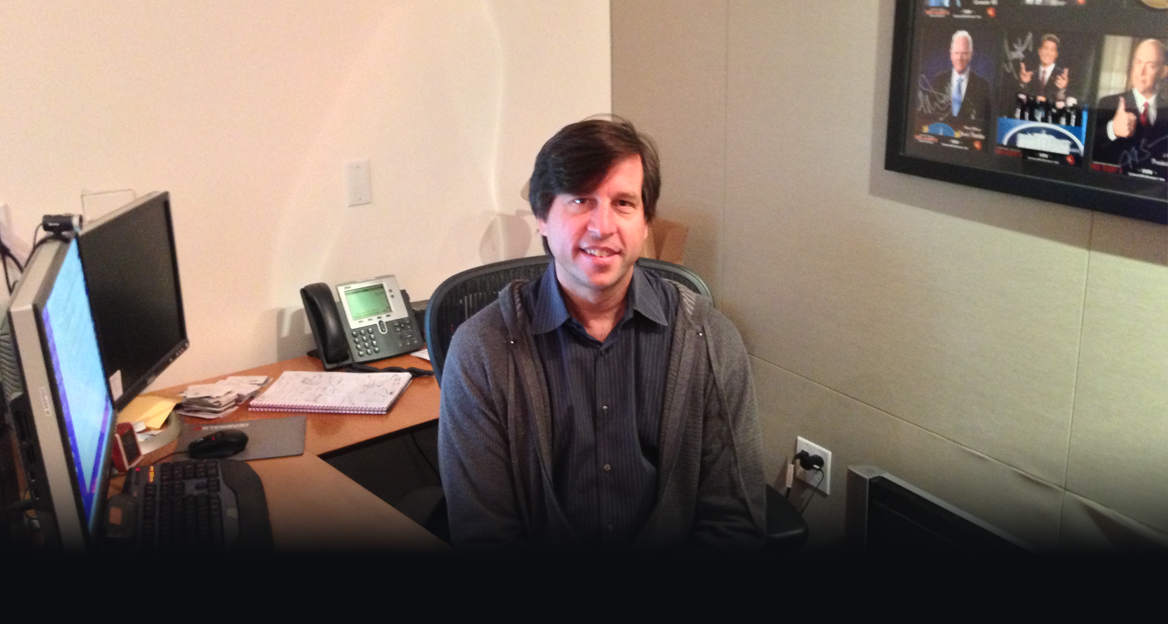
JVC in his office (he understands French and speaks it rather well)Sam Bass moves on to general gameplay and live services: He reiterates that this is more of an evolution than a revolution for the genre. The following features are being introduced: persistent profiles, integration of community features, social media, cloud saves, and a continuous update system.
Possible additions include: factions, game modes, tournaments, maps and lots more…
The client to be installed on the computer will handle chat, synchronisation issues and updates, and will form the basis for future CnC titles (other universes will be able to be added, hence the name Command & Conquer rather than simply Generals 2).Jeremy Townsend talks about balancing: They’ve completely changed the way balancing is handled in this game: each unit can be managed independently, thereby avoiding the disruption of other units, as was the case in the past when balancing was done at the level of different weapon types.
He discusses the classic features making a comeback: fog of war, abilities, upgrades, unit ranks (veterancy), buffs and debuffs, garrisoning, civilian technical buildings, General powers, as well as a new feature: oil.Oil is a second resource in this upcoming CnC; players must construct an oil rig on oil-bearing maps, and this structure will pump oil. Oil is required, in addition to credits, to construct Tier 2 and 3 buildings and units.
Superweapons are back, with Scud missiles for the GLA and the Orbital Collider for the European Union.
The factions consist of 33 per cent new content, 33 per cent from Generals 1, and 33 per cent reimagined elements from Generals 1.
The European Union is heavily based on the US faction from Generals 1; in this game, it is a single, large, united, high-tech and aggressive nation – a classic faction that is easy for new players to get to grips with. Each European Power Plant supplies energy to buildings within a zone around it: there is no energy bar, but you cannot build any structures outside this zone, apart from depots and derricks. You must build a technology building to advance to Tier 2 and another to advance to Tier 3.
The GLA is larger than the previous faction (comprising more countries); it relies on weapons salvaged from around the world and sabotage techniques, and does not require Power Plants (as in Generals). Furthermore, some of its buildings can be specialised once to reach Tier 2 and upgraded a second time to reach Tier 3 (in addition to technology buildings).
The third faction was presented to us but is still under an NDA. It is different from the other two.
Potential game modes were shown to us(and we tested them): multiplayer PvP and PvE, either solo or in co-op (we were able to try out a really enjoyable co-op PvE session). Skirmish mode is, of course, back. However, they aren’t focusing on a single-player campaign mode for launch, but rather on single-player (PvE) modes.
He reiterated that he wanted the game to be fun and, above all, not ‘pay-to-win’:no content, units or abilities will be sold for multiplayer modes! A fourth faction may be added later, and the navy may also be added later, but there will be a very long beta comprising several phases. Finally, the Frostbite 2 engine is being updated as and when DICE releases patches, and if DICE releases an SDK (which they say is planned), they’ll create tools for mods.Chris Tamburrino spoke to us about the art direction: Their aim is to “restore the credibility” of the franchise and create a “visual identity”. They’re aiming for a high level of realism, similar to that of first-person shooters, without being photorealistic. They’re paying particular attention to colours, contrasts and lighting within the engine.
They don’t want the units to look like painted miniatures.
The infantry, on the other hand, will have exaggerated weapons and poses to make it easier for the player to recognise the unit type.
Structures will have multiple skins depending on upgrades and damage. Vehicles will be made up of several parts, each with a range of possible skins, so that every unit is unique straight off the production line. Furthermore, these skins will reflect dirt and wear and tear (as the game progresses, vehicles will look increasingly worn and dirty). Each faction will have its own colour palette.
The GLA has a military and Civilian style; its vehicles are made up of mismatched chassis and weapons with a makeshift look: 10 per cent futuristic – 90 per cent military.
The European Union has an angular, experimental style: 40% futuristic – 60% military.
For the first time, units will be able to have three animations at the same time: movement, firing and being hit.
Shadow Teams will have two states: detected and visible.
They are considering reintroducing combo units when buildings belonging to another faction are captured.Overview of the game’s audio: The original version is planned to feature a wide variety of accents for the units’ voices.
When you zoom in on units, you’ll be able to hear them. They may provide useful information (they want to give greater prominence to unit voices for event notifications than to the EVA voice) or say something amusing.
Frostbite 2 does not support dynamic music like Sage 2, but they intend to reintroduce this feature in the long term.
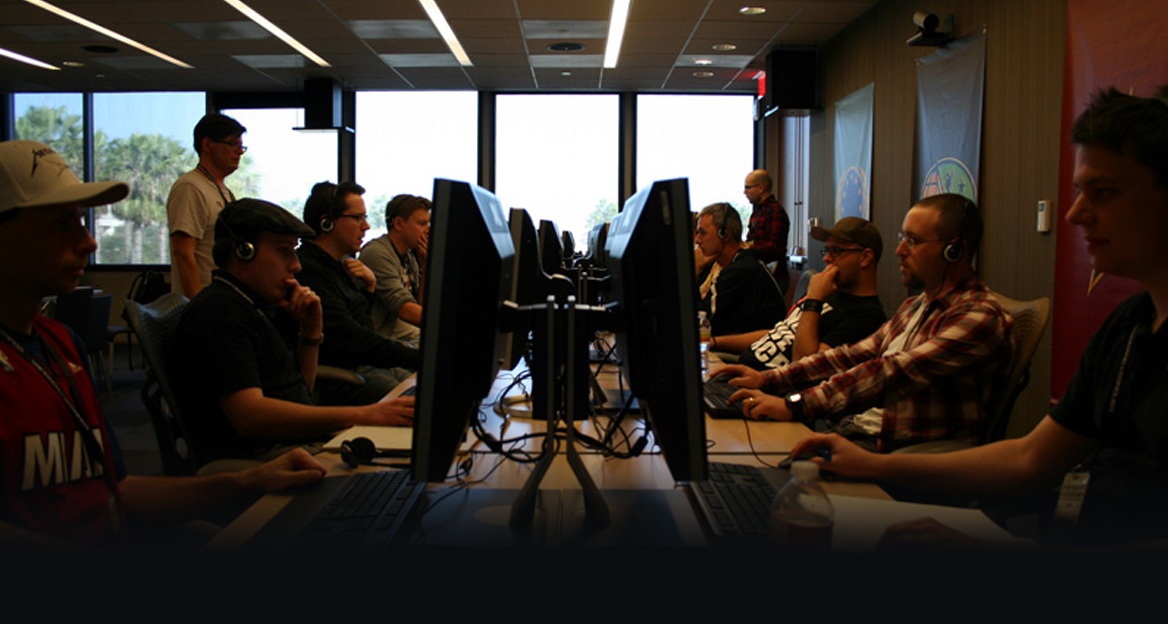
After playing numerous 1v1 matches with all three factions across four different maps, we’re sharing our initial feedback. Although there are plenty of suggestions and minor issues to iron out, the overall impression remains very positive.
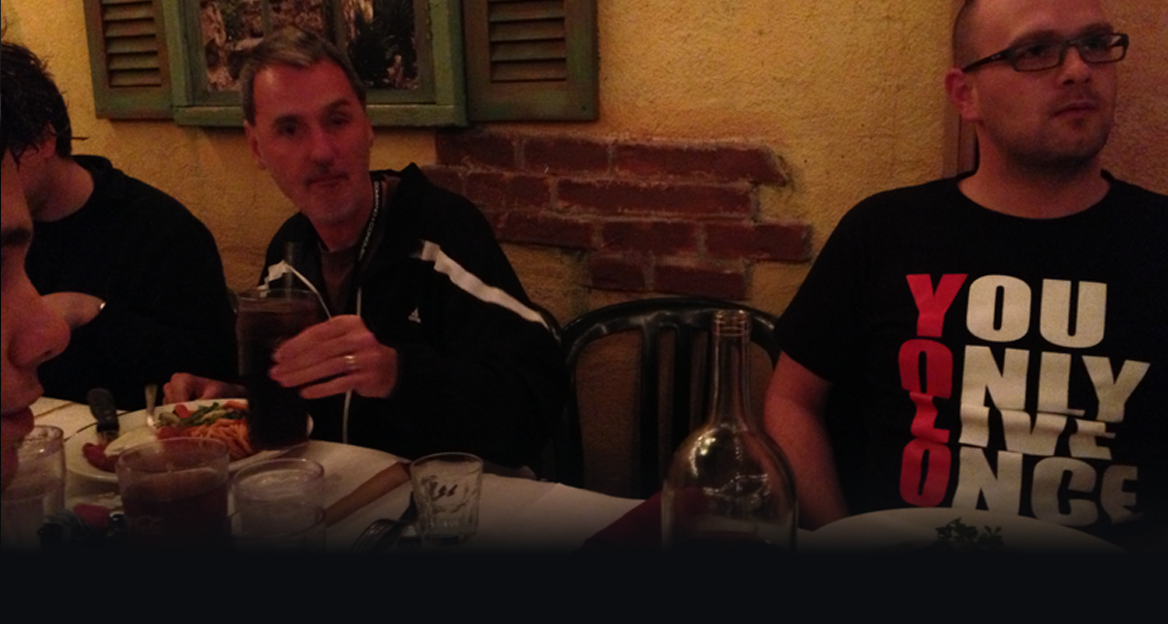
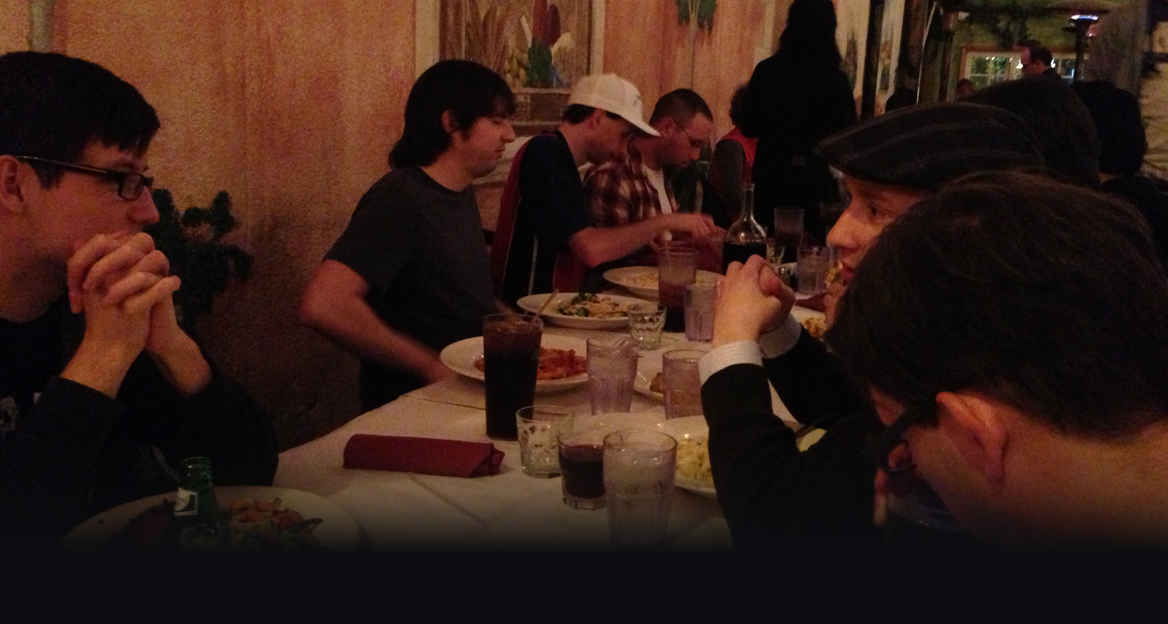
In the evening, we head to an Italian restaurant, C&O Trattoria, where we enjoy a lovely meal and end up singing ;)
Day two
Day two begins with a presentation on the future developments of Tiberium Alliances by David Florimond Erhard, the game’s community manager.The game balancing process: To kick off this presentation, they begin by listing the flaws in previous Command & Conquer games: rushing with a single type of unit, few interesting choices, useless units, the marginalisation of player skills, incomprehensible elements…
Here, they aim to prioritise strategy over mindless clicking, allowing for more choice rather than simply following a pre-set build order for each faction.
They use a five-step process for balancing:
combat spreadsheet;
build lab;
builder order optimiser + Cloud Wars;
alpha/beta: player testing;
community feedback + telemetry analytics.
These stages enable them to analyse combat between different units, build times, the best combinations of two units, the best build orders, and so on.The rest of the day:
We then looked at the proposed home screen interface for the service; they told us about Battlecast, replays and a proposed marketing video.
We were then treated to a 1v1 best-of-3 tournament.
We answered their questions individually or in pairs in front of the camera: it’s not always easy to improvise in English in front of a camera…
We tested a co-op PvE mode and gave our feedback on all the aspects we’d seen.
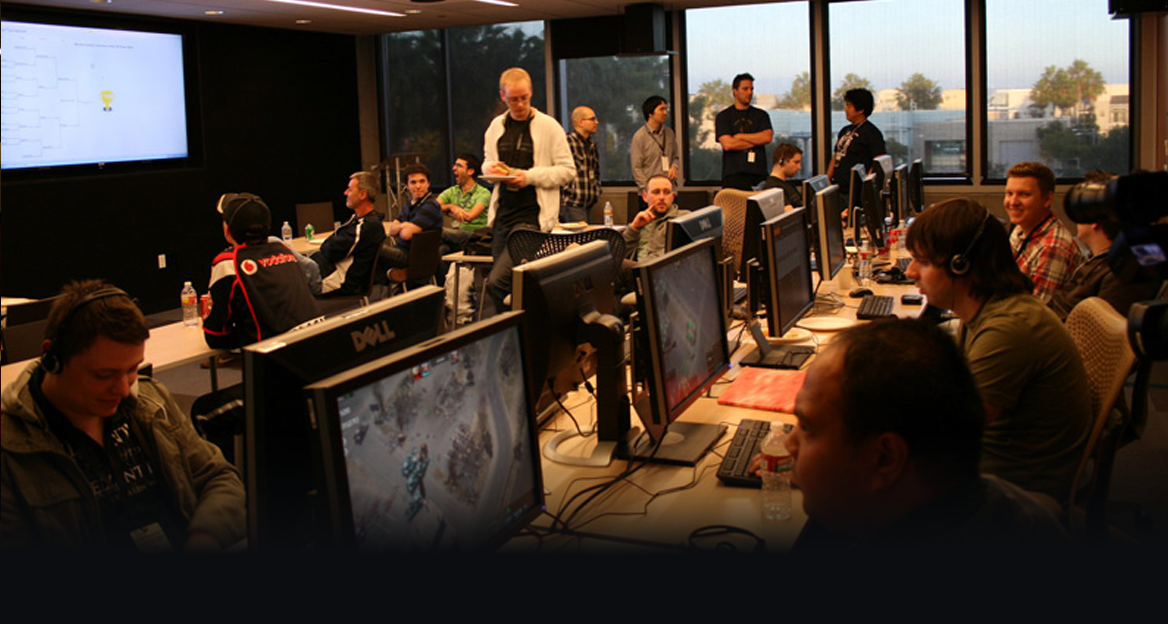
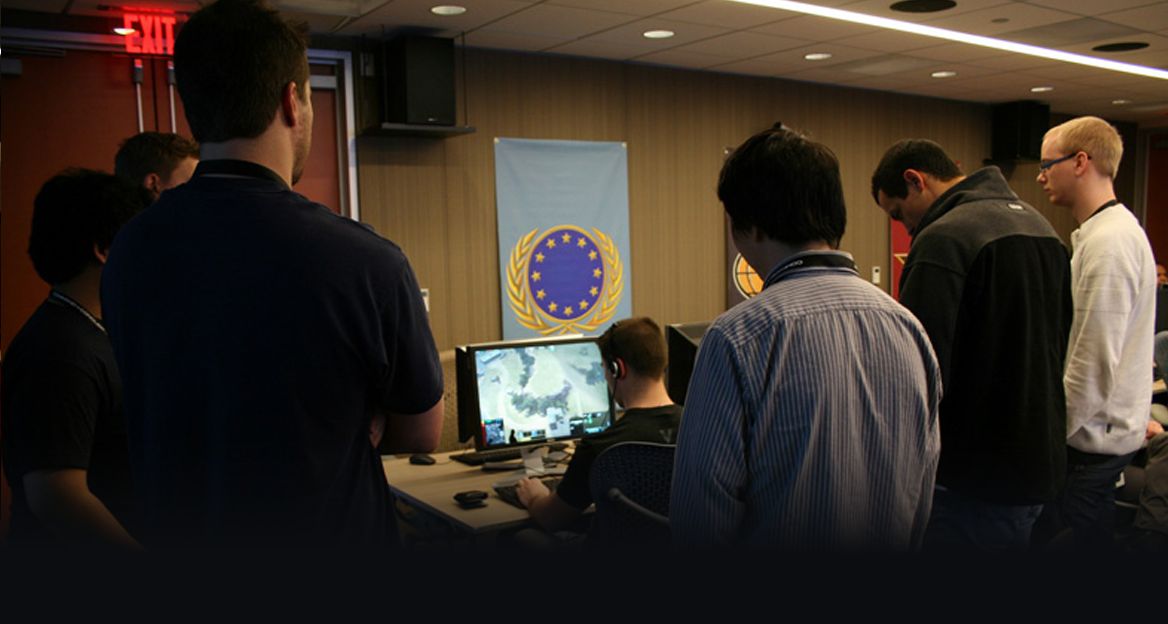
tournament finalist
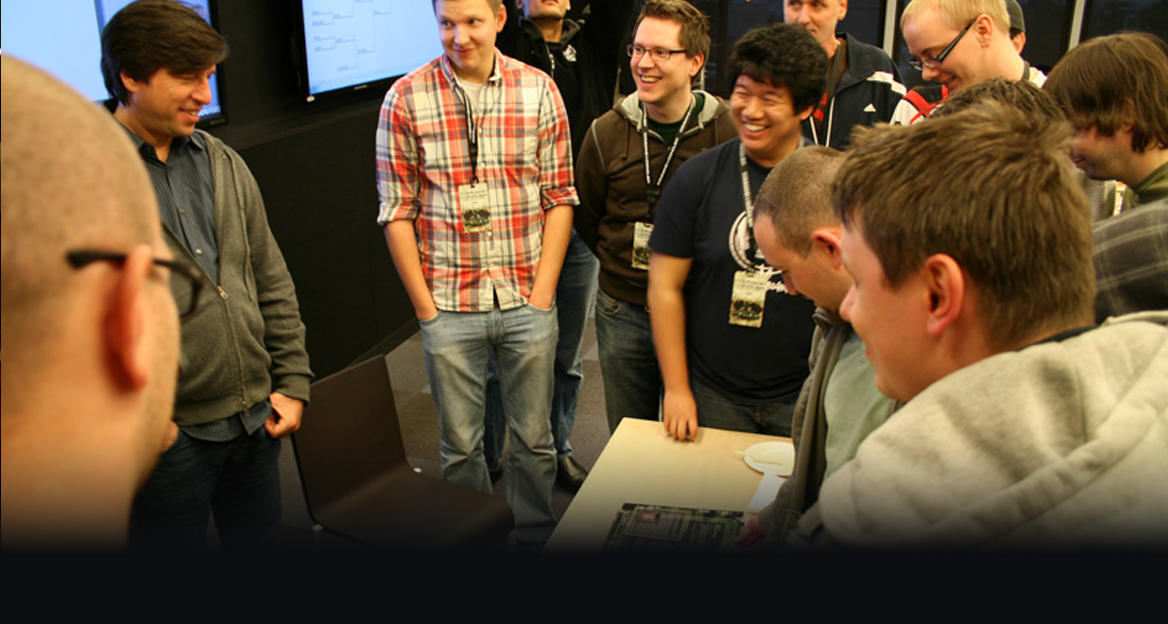
The Tiberium Bible? A rag to some...
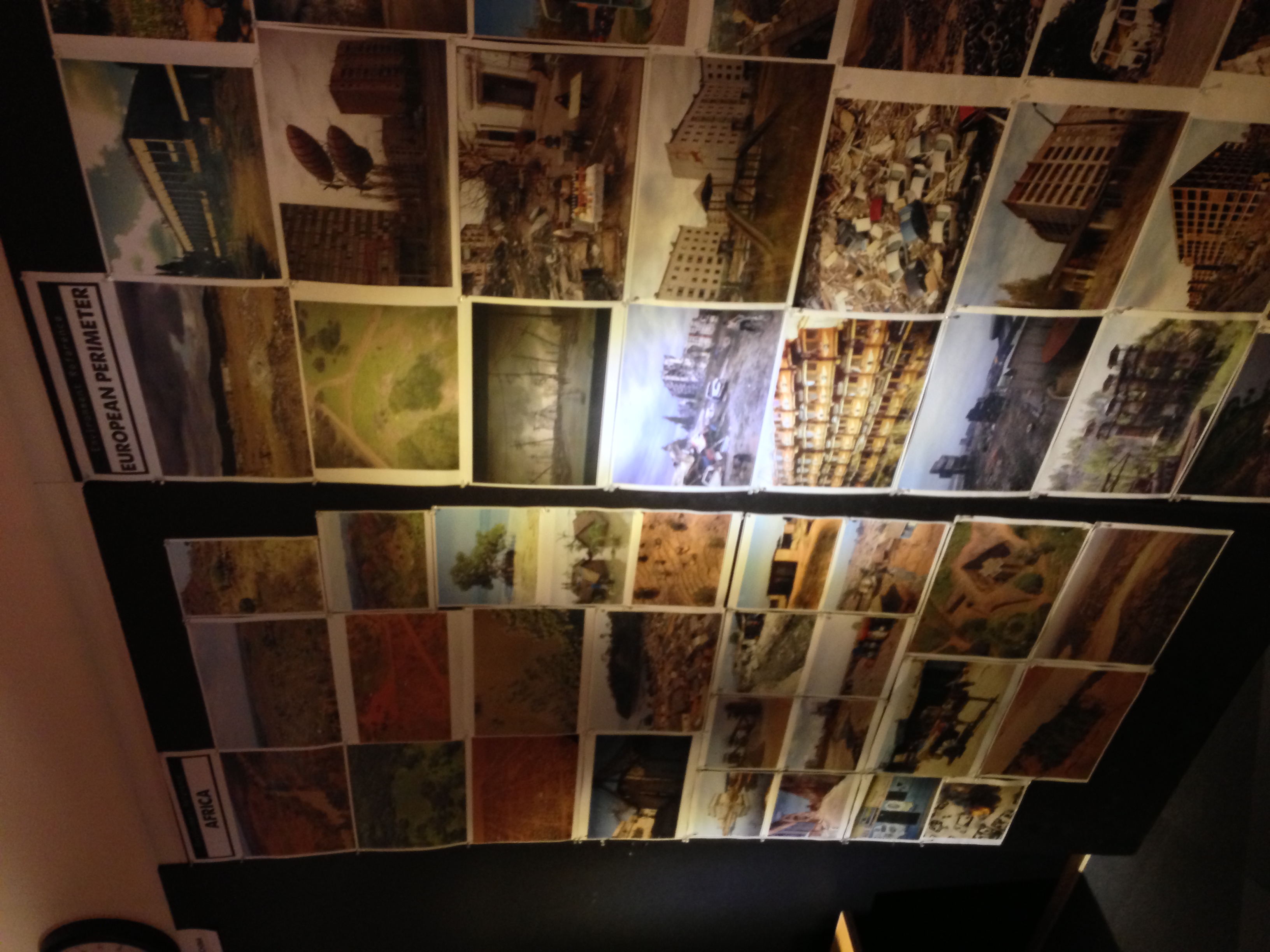
Finally, to round off our visit to EALA’s offices, we were given the chance to flick through the Tiberium Bible and visit the game team’s floor, where, amongst a vast array of concept art for the game, we found props from previous Command & Conquer titles.
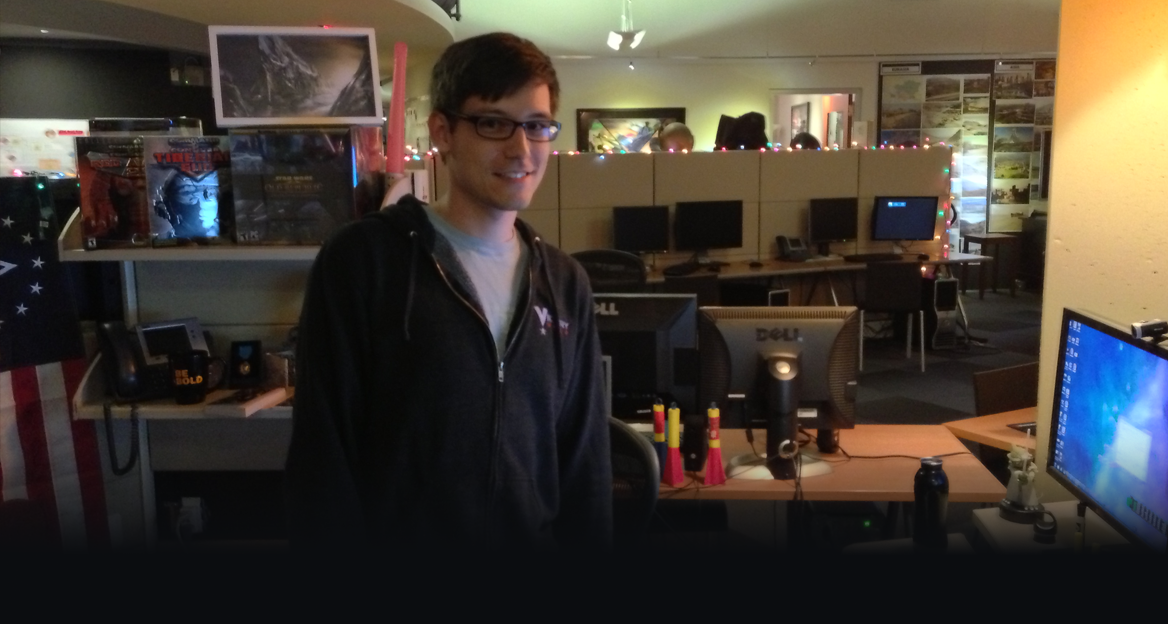
Eric in his office and the development room
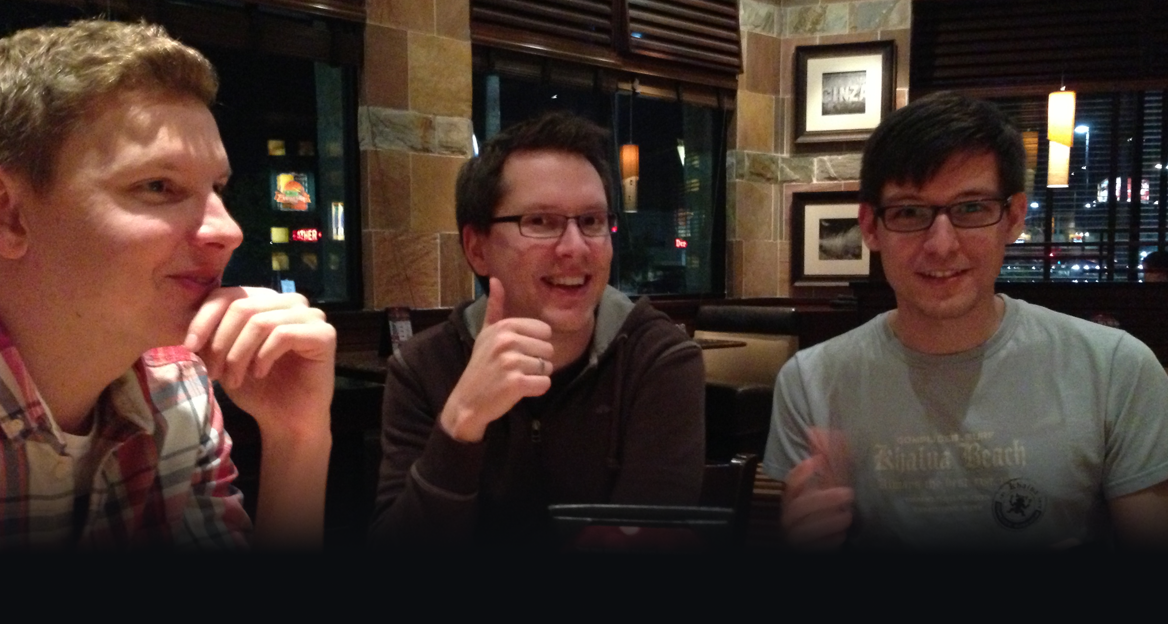
We rounded off the day at an American restaurant, BJ’s Restaurant & Brewhouse.
My thoughts on Command & Conquer 2013
Command & Conquer 2013 was still in alpha, so it was difficult to get a clear idea of what the final game would be like. But you can tell at first glance that it’s a Command & Conquer game, that the universe is a continuation of Generals, and that they’ve spent more time working on it than on the other titles.
The game has real potential, whether in terms of graphics, gameplay or the universe.
They still have several challenges to overcome: good game balance, pathfinding that’s better than in any other C&C title, and decent tools and game modes – whether in terms of network quality or AI.
The extended beta will be their baptism of fire; after Command & Conquer 4, they can’t afford to make any more mistakes. But the fact that they’re aware of this and have had time to lay solid foundations remains promising.
Finally, the paid aspect will also be a challenge: making the game profitable whilst keeping their promise not to turn it into a ‘pay-to-win’ title.
See you in 2013 to test it out and judge for yourselves how it all turns out.
Thanks to the whole team at Victory Games for their warm welcome, especially Eric, and to Alexandre and Greg in France for their support throughout the year.