Vehicles Section
Command & Conquer: Generals is a strategy game whose units are inspired by numerous military technologies and vehicles that actually exist in the real world. This short feature invites you to identify these vehicles and briefly compare them with the originals.
China
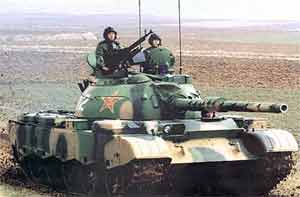
War Master In C&C: Generals, the Battlemaster Tank is the standard tank of the Chinese forces. On closer inspection, it is fairly easy to see that this tank is modelled on a real Chinese tank: the Type 69.
This tank is in fact a Chinese derivative of the Soviet T-54. It was a huge success on the export market and is still in use today by many armies around the world (particularly in Africa and the Middle East) as well as in China, even though it is now obsolete. However, its presence within the Chinese armoured forces is now marginal: the Chinese have since acquired numerous more modern tanks (such as the Type-96 and the Type-99).
Below: a Type 69 tank of the People’s Liberation Army.
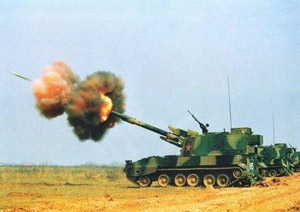
 Inferno Cannon Judging by the vehicle’s external appearance, the Chinese Inferno Cannon in C&C: Generals would correspond in reality to the PLZ-05 self-propelled artillery howitzer used by the People’s Liberation Army since the early 2000s.
This is all the more likely given that the vehicle in question is a derivative of the Russian 2S19 Msta-S (they share the same loading and firing system, and their external appearance is also almost identical) and that the latter was designed to accommodate several types of shell, in particular the new Russian incendiary shells with thermobaric charges.
As the PLZ-05 is derived from the Msta-S, it shares the same characteristics and would therefore be capable of firing napalm shells.
PLZ-05 of the People’s Liberation Army firing:
 Troop Crawler In the game, the Chinese have an armoured vehicle capable of transporting large numbers of infantry units from one point to another on the battlefield.
In reality, this vehicle is almost certainly a BTR-80: a Soviet-designed Armoured Personnel Carrier that is very widespread within the Chinese army. It should be noted, however, that the Troop Crawler in the game is unarmed, whereas the real BTR-80, in its standard version, has a turret fitted with a Minigun turret to ensure the vehicle’s self-defence. The vehicle is also amphibious. Finally, the soldiers transported in the BTR-80 have access to numerous features (such as hatches and portholes covered with thin layers of armour) enabling them to open fire from inside the vehicle.
Below: a genuine BTR-80.
 Nuke Cannon China has a formidable and impressive weapon in its arsenal: the Nuke Cannon. This is a large self-propelled artillery howitzer capable of firing shells fitted with a small tactical nuclear warhead.
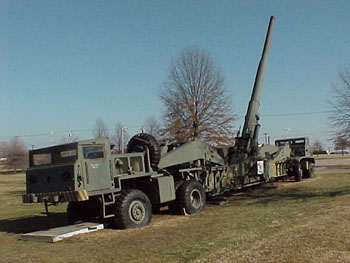
This weapon actually existed. It was the United States that first developed it. The first prototype of the atomic gun (codenamed ‘Atomic Annie’) was delivered in 1952 and was based on a truck-mounted M-68 howitzer.
Below: an American M-68 howitzer.
The weapon was then capable of firing shells with a 15-kiloton nuclear warhead to a range of 30 km with great accuracy. On 25 May 1953, gun No.9 carried out the only operational firing of a nuclear shell at a range of 27 km at the Nevada Nuclear Test Site. The project was subsequently abandoned as it proved unsatisfactory. Other nuclear powers may also have secretly developed similar systems, but these subsequently became obsolete with the advent of cruise missiles and intercontinental ballistic missiles and were surely abandoned as well.
The photograph capturing the test is famous: indeed, it was this photograph that inspired the ‘Nuke Cannon’ icon in the game. The resemblance is clear:
 ECM Tank In C&C: Generals, the Chinese faction has a rather unusual weapon in its arsenal: the ECM Tank, capable of using modern electronic warfare techniques to jam or disable enemy equipment.
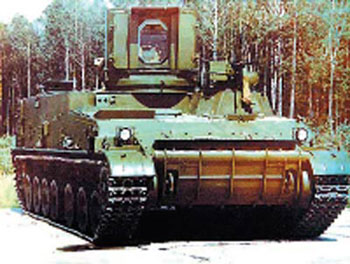
It is hard to believe that such units could exist. And yet they do. Many countries have such projects. This is particularly true of Russia, which has a prototype vehicle called the ‘Stilet’, equipped with a sophisticated electromagnetic wave cannon system. This vehicle was originally designed to disable enemy electronic equipment and thus paralyse command vehicles within tank platoons, or even silence enemy Command Centers in order to sow chaos amongst the enemy ranks.
This concept is quite similar to the way the ECM Tank can be used in the game. It is completely unknown whether the “Stilet” project was successful, as it remains shrouded in secrecy. In any case, it is highly likely that China has carried out similar experiments for military applications.
Below: prototype of the “Stilet”.
 MiG In C&C: Generals, the Chinese army has in its arsenal an aircraft called the MiG, which is fairly versatile in that it can attack both ground and air targets.
MiGs (short for Mikoyan-Gurevich) are famous Soviet-designed aircraft that have been exported to a great many countries. The People’s Republic of China has always possessed them and even manufactures some locally under licence. The Chinese have even occasionally collaborated with the USSR on development programmes for certain MiG aircraft (and this is still the case today with Russia).
But, as far as the aircraft in the game is concerned, is it actually a MiG, and if so, which MiG model are we dealing with here? It is indeed a valid question, as in reality, two aircraft used by the Chinese resemble the MiG as it appears in the game.
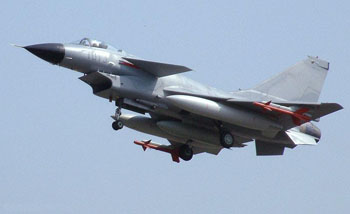
The first is the Chengdu J-10, which is a 100 per cent Chinese-designed aircraft. The aircraft’s appearance is indeed very similar to that in the game, but certain details differ, such as the shape of the nose or the rounded shape of the ventral air intakes.
Below: a real Chengdu J-10 from the Chinese Air Force; a few differences can be seen:
The second possibility is that it is in fact a Russian-designed MiG-1.44. This is, in fact, the more likely of the two hypotheses, as the shape of the MiG-1.44 is almost identical to that of the MiG in the game, including the nose and the ventral air intakes. The MiG-1.44 is merely a technology demonstrator, and the project has since been suspended (though not entirely abandoned) by Russia. However, numerous rumours circulated in 2002 (the year the game was released, it should be noted) regarding Russia’s sale of the aircraft’s blueprints to China, which only serves to reinforce this theory, even though the aircraft was never mass-produced by China.
The Chinese MiG featured in the game is in fact a Russian-designed MiG-1.44; below is a photograph of one of the few prototypes of this aircraft ever built:
 Helix The Helix is the helicopter used by the Chinese in the game. It is very easy to identify, not only because of its shape but also quite simply because of its name.
In fact, in reality, its real-world counterpart is the Ka-29 Helix. This is a Soviet helicopter used for transport, support and anti-submarine warfare missions. In the real world, the Chinese military uses the Ka-29 Helix, but only within its naval aviation forces and in rather limited numbers.
Below: a real Ka-29 Helix helicopter.

United States Humvee In C&C: Generals, the US Army has this fast, lightweight vehicle, which is ideal for reconnaissance and infantry support.
In reality, the Humvee is an American all-terrain vehicle equipped with a .50-calibre (12.7 mm) machine gun.
Its official designation is ‘M-998 HMMWV’ (an acronym standing for: High Mobility Multipurpose Wheeled Vehicle), but the term ‘Humvee’ is preferred as it is much shorter and easier to pronounce. It is also very widespread within the US armed forces and serves as a multi-purpose vehicle.
Below: a real US Army Humvee.
 Paladin In C&C: Generals, the US Army uses a technologically advanced tank called the Paladin, which is unique in that it is equipped with a system capable of intercepting enemy rockets, thereby ensuring greater survivability.
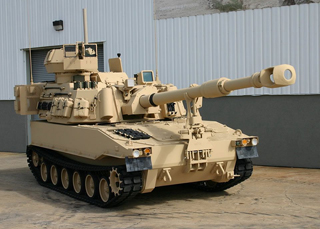
In reality, it can be assumed that this unit was inspired by a US military vehicle of the same name: the M-109 A6 Paladin. There are, however, differences between the Paladin in the game and its real-world counterpart. For example, the one in the game is a tank, whereas in reality the M-109 A6 is a self-propelled howitzer.
The main similarity lies in the fact that the real-life Paladin is a vehicle utilising highly advanced detection and protection technologies, some of which involve lasers. The vehicle’s firing range is also enhanced by the use of a very powerful designation laser. Several studies are currently underway to improve this vehicle’s defences using laser technologies.
Below: an American M-109 A6 Paladin self-propelled howitzer, which undoubtedly inspired the Paladin Tank in the game.
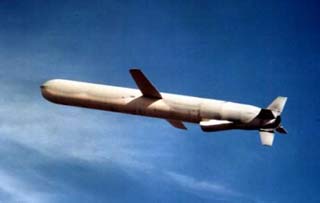
 Tomahawk The Tomahawk is the long-range Artillery unit available to the United States in C&C: Generals.
This weapon is inspired by a real-life American cruise missile bearing the same name: the BGM-109 Tomahawk. However, there are notable differences between the real-life model and its virtual counterpart.
Firstly, the name ‘Tomahawk’ refers solely to the cruise missile itself, and not to the launcher and missile combination. Furthermore, there is no longer a ground-to-ground version of this weapon in use today, and consequently there is certainly no longer a self-propelled ground-to-ground version, as thesewere withdrawn from service during the 1990s.
Below: a ‘Gryphon’-type ground-to-ground Tomahawk launcher, withdrawn from service in the 1990s.
The only versions that still remain are the naval (sea-to-sea, sea-to-surface) and airborne (air-to-surface) versions, but these are still very widespread and frequently used by the US Navy (as was the case, for example, in Kosovo in 1999 or in Iraq in 2003).
It should be noted that this missile is generally equipped with conventional warheads but can also carry a nuclear warhead.
Below: a US Navy BGM-109 Tomahawk.

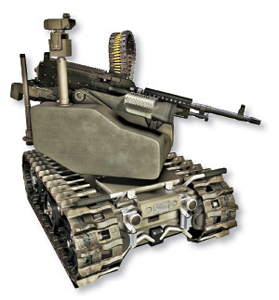
 Sentinel drone In C&C: Generals, the Americans use numerous drones. In Zero Hour, the sentinel drone is very useful for defending bases against enemy infantry assaults (particularly attacks by suicide bombers or G.L.A. rioters).
This unit is highly representative of a trend that has been affecting armies worldwide for several years: the increasingly common use of drones and other combat robots. The sentinel drone is inspired by a real-life American drone: the Foster-Miller Talon MAARS (MAARS standing for “Modular Advanced Armed Robotic System”). These drones are already in widespread use by the US Army and are primarily employed for area surveillance missions, allowing human personnel to focus on other tasks. This is exactly how they are used in the game.
Below: a Talon MAARS drone.
 Avenger The Avenger is a unit from C&C: Generals - Zero Hour used by the Americans. It is a mobile air defence and support platform equipped with laser technology to attack enemy aircraft, designate targets to maximise the damage inflicted by other units, or act as a shield against enemy missiles.
This vehicle does not actually exist as such in reality, but it was undoubtedly inspired by real-world hardpoints: the AN/TWQ-1 Avenger (sometimes referred to as the M-1097 Avenger). Incidentally, the term ‘Avenger’ translates as ‘Avenger’ in French. It is an air and missile defence system developed by the US Army. In reality, the system does not use lasers but rather a weapon system consisting of FIM-92 Stinger anti-aircraft missiles guided by a sophisticated laser designator system (which may explain why the missiles have been replaced by lasers) and a .50-calibre machine gun.
However, variants of this weapon using lasers exclusively are indeed under development. It is also worth noting that the weapon system is mounted on a Humvee chassis (as is also the case in the game).
Below: AN/TWQ-1 Avenger.
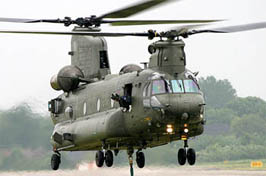
 Chinook Transport In the game, the United States uses this aircraft to gather resources and to rapidly transport units from one point to another on the battlefield, regardless of obstacles on the ground.
This helicopter does indeed exist in real life under the name ‘CH-47 Chinook Transport’; it is of American design and has also enjoyed great success as an export. The US military still uses it in large numbers.
It is a heavy-lift Transport Helicopter renowned for its ability to carry a large number of people as well as cargo, and as such it is fairly well represented in the game.
Below: US Army CH-47 Chinook Transport.
 Comanche In the game, the American Comanche is a multi-role air support helicopter that excels at ground attack missions when operating in a group.
In reality, the Comanche existed under the designation RAH-66 Comanche. It was a technologically advanced stealth helicopter. However, the project was never completed for various reasons, chiefly due to its excessive cost. The programme was officially scrapped by the US military in 2005. But since the game was released in 2002 (at which point the project was still ongoing) and as the events depicted in the game take place in 2020, it is only natural that it should feature in the game.
Note that in the ‘Zero Hour’ expansion, General Granger’s Comanches can be upgraded to become Stealth Comanches, just like the original.
Below: a photograph of one of the few RAH-66 Comanche prototypes ever built.
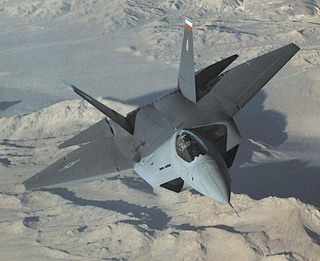
 Raptor In the game, the Americans use this multi-role aircraft to secure air superiority and to bomb enemy positions.
The F-22 Raptor exists in real life and is indeed in service with the US Air Force. This fighter is, in fact, a very recent development, havingit entered service in 2005. It is a highly advanced and high-performance fifth-generation Stealth Fighter, but one with an exorbitant cost. So exorbitant, in fact, that the US Congress suspended its production in 2009 following the economic crisis. In total, just under 200 aircraft will be commissioned by the US Air Force. The technologies used in this aircraft are so sensitive and advanced that the aircraft has been banned from export. It should also be noted that whilst the aircraft’s primary role remains air superiority, it is also capable of carrying out strikes on ground targets and is therefore fairly well represented in the game.
Below: photograph of a real F-22 Raptor:
 Stealth Fighter The American stealth fighter is used as a strategic weapon to strike enemy ground troops or ships. Its stealth capabilities mean it only reveals itself at the moment of attack, allowing it to evade enemy air defences more easily.
As with many other American units, the Stealth Fighter is modelled on a real aircraft. In this case, it is the American F-117 Nighthawk. This aircraft was the first stealth aircraft to be mass-produced. Its existence was kept secret for a long time, and it is believed to have been the cause of numerous UFO sightings in the 1980s. Due to its high unit cost,only around sixty were built, and it was officially withdrawn from service in 2008. It was primarily a stealth ground-attack aircraft, which fits perfectly with the role assigned to it in the game.
Trivia: the myth surrounding this stealth aircraft was shattered in 1999 after a US Air Force F-117 was shot down by a Serbian SA-3, a Soviet air defence system designed in the 1960s and yet already obsolete.
Below: a real F-117 Nighthawk.
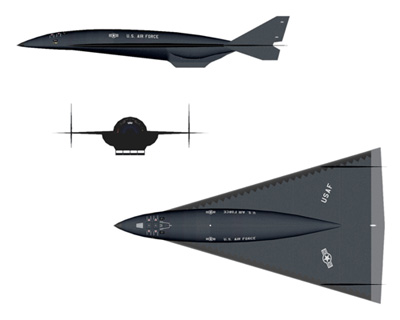
 Aurora In the game, the United States has a supersonic bomber called the Aurora in its arsenal.
In reality, this aircraft does not exist as such, but the Americans are said to have worked on a project for an aircraft also named Aurora, capable of flying at a staggering speed (Mach 5, or over 6,000 km/h). It is reasonable to assume that this project inspired the creation of the Aurora Bomber in the game.
The existence of this aircraft in the real world remains, however, hypothetical, as its existence has never been officially acknowledged by the US military. What’s more, the speculations that have been made regarding its design all differ from what is presented to us in the game. Finally, in theory, this aircraft was not intended for bombing missions but primarily for reconnaissance missions: its unrivalled speed would allow it to fly at high altitude and evade even the most sophisticated air defence systems, but, on the other hand, this speed would prevent it from targeting and destroying targets with precision.
An artist’s impression of what the Aurora, the US Air Force’s top-secret reconnaissance aircraft, might look like:
 Reconnaissance drone In C&C: Generals, most ground vehicles can be accompanied by an aerial drone. There are various types of drone. The reconnaissance drone is one of them. Its distinctive feature is that it increases the field of view and range of the vehicle it accompanies.
In reality, the United States has developed numerous drones, particularly for reconnaissance missions, as is the case with this unit.
However, the aircraft that most closely resembles the game’s reconnaissance drone is undoubtedly the RQ-1 Predator. It is the most widespread and most widely used reconnaissance drone by the US military. Some variants can even be equipped with missiles.
Below: photograph of a real RQ-1 Predator reconnaissance drone.
 Scorpion Rocket drone In C&C: Generals, most ground vehicles can be accompanied by an aerial drone. There are various types of these drones. The Scorpion Rocket drone is one of them. It proves particularly effective against vehicles.
In reality, the United States has tested numerous drones, including those armed with missiles.
However, the drone that most closely resembles the game’s Scorpion Rocket drone in appearance is almost certainly the X-48B produced by Boeing. In reality, however, this drone is unarmed and is primarily used for reconnaissance and surveillance operations.
Below: photograph of a real Boeing X-48 B drone.

G.L.A.Jeep Although it is not possible to formally identify this fast but fragile unit used by the GLA, a parallel can nevertheless be drawn with the real world.
Indeed, this vehicle, despite its ridiculous appearance, is very much inspired by reality. Many rebels and militias in African countries use such vehicles: civilian 4x4s and pick-up trucks to which they add all manner of weapons. This phenomenon is so widespread that the armed forces of industrialised countries refer to these vehicles as ‘the poor man’s tank’. Although they offer their passengers no protection against modern weapons, they do, in return, provide great mobility and can even prove effective in the absence of better options. This was particularly evident during the conflict in Somalia in 1993, when these vehicles caused some difficulties for US forces. More recently in Sudan, entire columns of these vehicles carried out raids against UNMIS forces before disappearing into the desert.
A random example of a ‘poor man’s tank’:
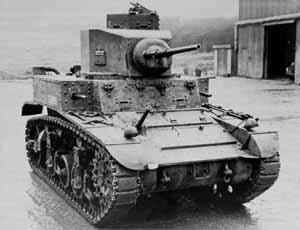
 Scorpion The G.L.A. has in its arsenal a Light Tank, fast and inexpensive but outdated.
Although several tanks bear a rough resemblance to it and could therefore be the inspiration for this unit, there is one that stands out from the rest. This is the American M3 Stuart light tank, which was used by the United States during the Second World War. The unit’s overall appearance (turret shape, track rollers, rugged look, etc.) is indeed reminiscent of this vehicle.
The M3 Stuart tank certainly inspired the G.L.A.’s Scorpion Tank:
 Quad Contrary to what is sometimes claimed, this G.L.A. mobile anti-aircraft vehicle does not originate from Soviet stocks; it does not even date from the Soviet era. In fact, no Soviet vehicle really resembles it, apart perhaps from the BTR-152 TCM-20, which is, moreover, an Israeli modification of the Soviet BTR-152. And even then, this vehicle differs from the Quad in several respects (e.g. the shape of the rear platform, a different front profile, two Mini-Guns rather than four, etc.).
Below: a BTR-152 TCM-20:
It is in fact more likely that the vehicle is actually an Sd.Kfz. 7/1 Flakvierling-38, which was a mobile four-barrelled anti-aircraft vehicle used by the Germans during the Second World War. Moreover, the overall appearance of the Quad bears much closer resemblance to this vehicle than to the BTR-152.
Wehrmacht Sd.Kfz. 7/1 Flakvierling-38 during the Second World War:

 Scud
Scud
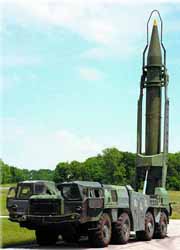
It comes as no surprise to find the famous Scud launchers in the hands of the G.L.A. in the game.
This former Soviet-designed weapon was indeed exported in very large numbers, particularly to countries in the Middle East (especially Iran and Iraq). The name ‘Scud’ is the NATO designation (‘SS-1 C Scud-B’ to be precise); the original name of the missile is ‘9K72 Elbrus’. It is a first-generation cruise missile, a direct descendant of the German V-2 rockets captured by the Soviets during the Second World War. The missile in question gained notoriety particularly during the Gulf War, when Iraqi forces deployed it in very large numbers.
Although it has a significant maximum range (300 km), the Scud is not, however, very accurate (with a margin of error of 900 m at maximum range), as its design is very outdated. The danger lies mainly in the fact that the system is inexpensive, easy to obtain and use, and that the missile is fast, tends to follow unusual trajectories making it difficult to intercept, and, above all, can be modified to carry chemical or bacteriological warheads (as was the case during the Gulf War) or even nuclear warheads. In light of all this information, it can be concluded that the Scud is very well represented in C&C: Generals.
The actual mobile Scud-B surface-to-surface missile system: